Wednesday, January 25, 2006

Part 7: A Critical Analysis of Rav Yisroel Hirsch’s Critique of Eruvin in Brooklyn

Continued from part VI

Page 9 comment 32:
“It is true that such an opinion is maintained by many poskim [that pirtzos esser is d’rabbanan]. But it is far from unanimous. R’ Ahron devotes much space in his קונטרס to proving the veracity of the contrary position. Therefore, a primary concern of those who oppose the eruv was that Brooklyn remained a רה"ר since the pirtzos in its mechitzos were larger than 10 (or 16) amos.”

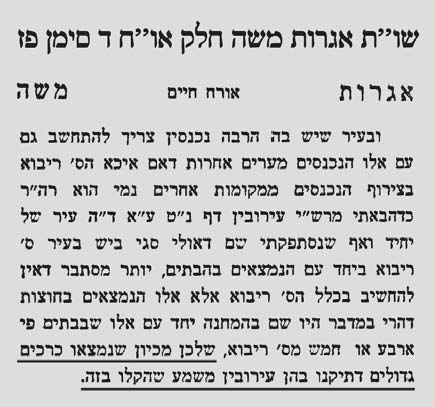
Our list proves that it is as close to unanimous as it gets. The overwhelming majority of poskim (see Pirtzos, Biblical or Rabbinical proscription?) including Rav Moshe zt”l maintain that pirtzos esser is d’rabbanan. It is unjustifiable to compel others to go against the accepted halacha pesuka that pirtzos esser is d’rabbanan. Rav Aharon zt”l and the Mishkenos Yaakov are just about the only poskim who maintain that pirtzos esser is d’Oraysa. (Brooklyn has the added benefit that since our mechitzos are at the waterfront, even Rav Aharon would admit that they are sufficient since there is no rabbim traversing them.) Additionally, Rav Hirsch is mistaken. 16 amos is a shiur reshus harabbim not a shiur pirtzah and even the Mishkenos Yaakov admits as such (Mishkenos Yaakov, O.C. 122 p. 144-45).


Page 9 comment 33:
Has already been discussed in comment 15.


Page 9 comment 34:
“All that is stated in this paragraph [that Rav Moshe agrees that there is almost no true reshus harabbim today] and the following one is meaningless. R’ Moshe was not matir [using a cane on Shabbos]; rather, he felt that it should be assur but conceded that today it is generally done. He agreed to leave that practice because “generally” there is no רה"ר.”

Rav Moshe zt”l’s final p’sak regarding using a walking stick on Shabbos is not the issue here at all. The issue is that Rav Moshe stated in three teshuvos (Igros Moshe, O.C. 3:94, 5:19, 5:24:10) that there is no reshus harabbim today and the distinction the anti-eruv group has always asserted is that Rav Moshe wasn’t referring to Brooklyn since he has stated that Brooklyn is a reshus harabbim. However, now that we know that one of these three teshuvos is referring to Boro Park (ibid., 5:24:10) there is no other explanation but that he agreed that the minhag is not like his shita in eruvin. The fact that they omitted from Rav Moshe’s teshuvos this important detail (Boro Park) is proof that there were some shenanigans within teshuvos Igros Moshe, particularly when it concerned eruvin.


Page 9 comment 35:
“This assertion [that Rav Moshe’s statement that no posek would allow an eruv in Brooklyn because Brooklyn, unlike Manhattan, wasn’t surrounded by mechitzos doesn’t pertain to us today since we have established that Brooklyn is encircled by mechitzos] is incomprehensible! R’ Moshe definitely states: “regardless of all the improvements that certain rabbis have or will implement.” The language could not be clearer that the matter is closed for discussion.”

Rav Hirsch is conflating Manhattan and Brooklyn. Nowhere did Rav Moshe zt”l state regarding a Brooklyn eruv that “regardless of all the improvements that certain rabbis have or will implement,” an eruv cannot be erected. Only in Manhattan did Rav Moshe sign on to the takanah of 1962. The inclusion of Brooklyn in the Manhattan issur is an invention of the 1979 Flatbush kol korei (see The 1979 Flatbush Kol Korei Exposed). [Regarding the Manhattan eruv, Rav Moshe agreed that the rabbanan can do as they please (Igros Moshe, O.C. 4:89 and HaPardes, 33rd year, vol. 9) but then signed on the 1962 takanah against an eruv. However, Rav Moshe stated (Igros Moshe, O.C. 4:86 and Addendum to O.C. 4:89) that he had signed against the Manhattan eruv because Rav Aharon Kotler zt"l and other members of the Agudas HaRabbonim had enacted a takanah against establishing an eruv in Manhattan.] In any case, Rav Hirsch would have to admit that this is either a gezeirah or a takanah and unless this is hora'as sha’ah, only a Sanhedrin has a right to implement this gezeirah forever or as Rav Moshe states that rabbanim may only enact a takanah for their particular locale and only for a short period of time (ibid., 4:49).


Page 9 comment 36:
“With this suggestion, the apex of absurdity has been achieved. R’ Moshe was alive and well when he published this addendum as a portion of his sefer in 1982. He never had a problem with it. No one had a problem with it. R’ Schwab considered it authentic, for he cites it authoritatively. I understand that the writers of this booklet have a big problem with it. But wishing it out of existence only exposes the great desperation that is driving their whole enterprise.”

It is a well known fact that Igros Moshe vol. 7 and 8 have been tampered with, and since there is no addendum in any other volume of Igros Moshe, there is no reason to believe the veracity of an addendum even in vol. 6. It’s no secret that Rav Moshe zt”l was surrounded by people who were vehemently against establishing an eruv in Brooklyn and who didn’t allow anyone supportive of an eruv to approach Rav Moshe. Additionally, there are questions regarding this addendum: To whom and when was it written? Rav Moshe admits therein that regarding a Manhattan eruv one can disagree with his chiddushim pertaining to shishim ribo so why can’t one disagree with him regarding shishim ribo in Brooklyn? Why did they insert it as an addendum and not wait for the next volume of Igros Moshe to be published since this was the practice with all of Rav Moshe’s teshuvos (by 1982 there was no rush to publish this teshuvah since the issue of the eruv had already ended)? All of this strongly suggests that this addendum is not from Rav Moshe’s hand.

Additionally, Rav Hirsch is mistaken that Rav Schwab zt”l quoted this addendum. Rav Schwab was discussing the Manhattan eruv and therefore he quoted the 1979 Flatbush kol korei since it contained the text of the 1962 Manhattan kol korei (this indicates that Rav Schwab didn’t have the 1962 Manhattan kol korei). The 1979 Flatbush kol korei was published prior to this addendum (Igros Moshe vol. 6, 1982) which makes it impossible for Rav Schwab to be referring to this addendum.


Page 9 comment 37:
“R’ Schwab (Maayan Beis Ha’shoeva, Va’yakhel) lists R’ Henkin as a signatory in opposition to the eruv (Manhattan). I trust R’ Schwab.”

The fact that Rav Schwab zt”l mentioned the 1979 kol korei in Maayan Bais HaSho’eivah does not attest to the validity of the claim that Rav Henkin zt"l signed on the 1962 Manhattan kol korei. He was just quoting the text of the kol korei (since, as stated above, Rav Schwab most probably didn’t have a copy of the 1962 Manhattan kol korei) and not affirming every word stated therein. In any case, the 1962 kol korei is extant and there is no signature of Rav Henkin to be found. We also know from Rav Henkin’s letters (Kisvei Hagriah Henkin, p. 33) and from family members that Rav Henkin was even in support of a Manhattan (and Brooklyn) eruv. Therefore, even if Rav Schwab did mentioned the 1979 Flatbush kol korei and he was attesting to the legitimacy of the text of the kol korei, he could only maintain that he was under the impression that Rav Henkin was against an eruv but not that Rav Henkin signed the kol korei since there is no signature to be found.


Page 10 comment 38:
“I do agree that a kol korah by itself carries little weight. It is what is behind the kol korah that is important. In this case, it is public knowledge that R’ Moshe was against any eruv for Brooklyn or Manhattan.”

Rav Hirsch deserves credit for admitting that kol koreis carry little weight. However, it’s surprising that he believes “public knowledge” (which in the case of eruvin is based on kol koreis since it seems that even the rabbanim ha’ossrim are not very familiar with Rav Moshe zt"l's teshuvos regarding eruvin since they only quote these kol koreis) carries more weight then a kol korei. Even more so, there is a teshuvah that contradicts this so called “public knowledge.” Rav Moshe clearly writes (Igros Moshe, O.C. 4:87) that he doesn’t want to mix in to the matter of eruvin in Flatbush at all, so why would he sign such a strident kol korei? Additionally, Rav Moshe told Rav Tuvia Goldstein zt”l that the Flatbush rabbanim can do as they please. Therefore, this so called, “public knowledge,” should carry very little weight as well.


Page 10 comment 39:
“The obvious difference is that in seeking to establish an eruv, one takes a position which is contrary to the status quo, whereas the cases cited, e.g. shavers, uphold the status quo. However, in no circumstance should physical harassment or verbal abuse be condoned.”

The status quo was not against erecting eruvin. On the contrary, there was an eruv established in 1905 in Manhattan and in Brooklyn people erected street eruvin for Succos prior to 1979. (Who upholds the status quo regarding modern shavers? Public knowledge, kol koreis?) Therefore, the kuntres made a valid point that there are other d’Oraysas, such as shaving, where no one is mocheh, and why should eruvin be any different? Rav Hirsch should be commended though for not condoning the anti-eruv campaign of verbally abusing people whom utilize the eruv.


Page 10 comment 40:
“This is a grossly inaccurate presentation of R’ Schwab’s views. He expressly states that no part of Manhattan, Brooklyn/Flatbush can affect the construction of an eruv. The oblique reference here cited is to all cities in which the implementation of an eruv would be possible!”

Rav Hirsch is incorrect. Rav Schwab zt”l posited (Maayan Beis HaSho’eivah, pp. 232, 234) that hopefully the future generations would be strong in Torah and at that point, with great joy, everyone would take part in erecting eruvin in Manhattan and in all cities. If one were to read Rav Schwab’s writing’s regarding eruvin, they would see that his main objection to eruvin was because of the lack of Torah observance. To claim that at this point in time this is still an issue shows a lack of understanding of Orthodox Jewish history in America.
_________________________________________________


In closing this series, as we have stated in the first post we have been told that after Rav Hirsch published his Critique of Eruvin in Brooklyn, a member of his congregation pressed him to answer what Rav Moshe Feinstein zt"l's shita was regarding mechitzos. After analyzing the way it was elucidated in Eruvin in Brooklyn, he admitted that what was stated therein was accurate. Additionally, the later edition of Eruvin in Brooklyn, The Community Eruv kuntres covered many of Rav Hirsch’s comments.

All of the above is testimony that while there is no doubt of Rav Hirsch’s erudition and vast Torah knowledge, when the issue is eruvin one’s opinion tends to become extremely subjective. Why would Rav Hirsch who is of the opinion that one can even argue on the Shulchan Aruch maintain that we can’t disagree with contemporary poskim (never mind that it’s likely that these contemporary poskim would allow an eruv today) if not for the fact that the issue is eruvin.

Tuesday, January 24, 2006

Part 3: The Truth About Warsaw

Continued from The Truth About Warsaw part: II

On the Los Angeles eruv website it states that Rav Gustman zt"l was asked, “How did Warsaw continue to keep their Eruv, even after the population there grew, and exceeded 600,000. He answered that Warsaw did not have main streets like Paris or Brooklyn, wherein there were 600,000 people from all around using those streets. Warsaw expanded in a manner that the people from the various parts of the city did not use any single streets, and rather each neighborhood used the adjacent streets. At the time there were no cars or wide streets, hence no major thoroughfares used by 600,000 people.”

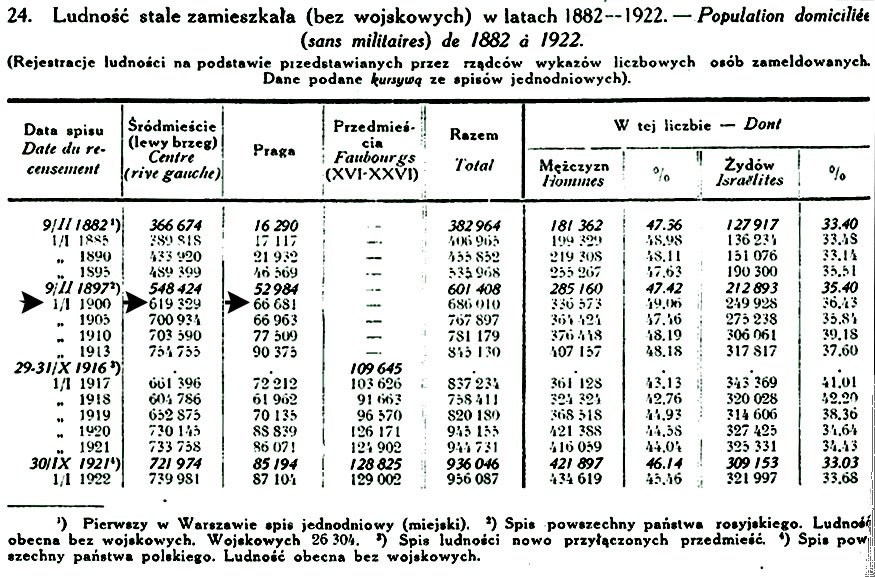
This story in the name of Rav Gustman zt”l is not credible. The fact is that Rav Shlomo Dovid Kahane zt”l, one of the main rabbanim of Warsaw before World War II, wrote (Divrei Menachem, O.C. vol. 2, pp. 42-43) that in Warsaw they didn’t want to rely on the criterion of shishim ribo at all (however he maintained that they relied on the universally accepted criterion of mefulash u’mechuvanim m’shaar l’shaar). Additionally, the story is questionable since there were trains and trolleys in Warsaw and those streets were heavily trafficked by commuters from other parts of the city (there were two bridges that crossed from Warsaw to Praga and people used to commute both ways there as well). Consequently, there is no difference between Warsaw and our cities and if an eruv was allowed in Warsaw there is no reason not to allow an eruv in Brooklyn as well (see also The Overwhelming Majority of Achronim Maintain That the Shishim Ribo has to Traverse the Street Itself).

Monday, January 23, 2006

Part 2a: Why Brooklyn Is Not a Reshus HaRabbim

Continued from Why Brooklyn Is Not a Reshus HaRabbim part: I

Since there is no street in Brooklyn that is traversed daily by 600,000 people ― there is no shishim ribo ovrim bo b’chol yom.

It was the mesorah through the ages that shishim ribo is dependent on a single street. The Divrei Malkiel (4:3) stated when writing to the people erecting an eruv in the city of Odessa, which had approximately shishim ribo, that, “the minhag is to erect eruvin even in the biggest of cities and it does not concern us that they have shishim ribo since the shishim ribo is dispersed over all the streets.” New York’s population in 1905 was much more than shishim ribo and the rabbanim who were involved with the eruv then relied on the fact that there was no street that had shishim ribo traversing it (Oznei Yehoshua, 1:18 and Tirosh VaYitzhar, siman 73). This is one of the reasons why in Eretz Yisroel eruvin are maintained in Yerushalayim and in the Gush Dan [Bnei Brak with all the interconnected neighborhoods] even though these regions have shishim ribo as well (Rav Yisroel Yaakov Fisher zt”l in Even Yisroel, 8:36 and Kinyan Torah, 4:40).

These are some of the additional poskim who maintain that shishim ribo is dependent on the street:
Pnei Yehoshua, Shabbos 5b; Bais Meir, Shabbos 5b; Bais Yaakov, Eruvin 6a; Yad Dovid, Eruvin 55a; Bais Ephraim, p. 46; Mishkenos Yaakov, p. 126; Chiddushi Harim, siman 4; Yeshuos Malko, siman 27; Mishnah Berurah, Shaar HaTzion, 345:25 [the Mishnah Berurah indicates this by the usage of the phrase, “derech hamavoi hamefulash,” ― it is important to note, the Mishnah Berurah’s (345:24) primary issue is whether the shishim ribo are required to traverse the street every day of the year or whether occasional use of the street by 600,000 people would be sufficient, see also Toldos Shmuel, 3:86:10]; Minchas Elazar, 3:4; Bais Av, 2:5:2; Maharshag, 2:25; Chazon Ish, 107:6; Mahari Stief, siman 68; V’yaan Yoseph, 131:1, 155:1, 195:2; Divrei Yatziv, 173:4; Rav Shmuel Wosner shlita in Shevet HaLevi, 6:41; Rav Elyashuv shlita, as cited in the sefer Yashiv Moshe p. 58; Rav Yechezkel Roth shlita, in Emek HaTeshuvah 5:19; (See also the sheilah to the Chacham Tzvi in siman 37).

Even Rav Moshe zt”l (Igros Moshe, O.C. 1:109) accepted as fact that shishim ribo is dependent on the street and only later (ibid., 1:139:5, 4:87-88, 5:28:5, 5:29) stated his chiddush that in a city, shishim ribo applied to an area of twelve mil by twelve mil. [In this chiddush, admittedly his own, Rav Moshe defines shishim ribo as meaning 3,000,000 people (see Part 1: Shishim Ribo According to Hagaon Rav Moshe Feinstein zt”l).] Even after he developed his chiddush, Rav Moshe declined to give the rabbanim of Flatbush a p’sak against eruvin, as he wrote that his chiddush was not stated in the Achronim and that the Aruch HaShulchan would not agree with him (ibid., 4:87). That is why when it came to issues concerning a reshus harabbim ― for example, men wearing gloves or a watch on Shabbos or bringing back home on yom tov a lulav or a shofar for a woman or a child in an area that is not enclosed by an eruv ― Rav Moshe maintained that we rely on the heter of shishim ribo in all cities (ibid., 3:94, 5:19, 5:24:10; see also Rav Moshe zt"l and the Walking Stick). Rav Dovid Feinstein shlita (Kuntres L’Torah V’Horaah, vol. 6, 1976) posited that the heter for a Succos block eruv is because we rely on the heter of shishim ribo. Although he was referring to lower Manhattan, which according to his father’s chiddush met the requirement of having shishim ribo (Igros Moshe, O.C. 1:139:5), Rav Dovid still allowed an eruv. In summation it is a given that shishim ribo is conditional of a street.

Thursday, January 19, 2006

Are a Vehicle’s Occupants Included in the Shishim Ribo?

Many don’t realize that most poskim maintain that the occupants of a car are not tallied in the shishim ribo (Bais Ephraim, O.C. 26; Maharsham, 1:162; Yeshuos Malko, siman 26-27; Harei B’samim, 5:73; Bais Av, 2:9:3; Mahari Stief, siman 68; Satmar Rav, Kuntres Meoz U’Mekedem p. 27; Divrei Yatziv, 2:172:13; V’yaan Yoseph, 1:155:1; Kuntres Tikkun Eruvin Manhattan, siman 12 p. 105; Kinyan Torah, 4:40:6, and Rabbi Eliezer Y. Waldenberg shlita, author of the Tzitz Eliezer, as cited in The Contemporary Eruv, 2002 p. 54 note 119). The reason is either because a vehicle in itself is considered a reshus hayachid and therefore its occupants are not part of the total or because we only include pedestrians (holchei regel) who traverse the street in the tally.

It’s important to note that the concept that only holchei regel creates a reshus harabbim is already mentioned in the Rishonim (Or Zarua, Hilchos Erev Shabbos siman 4 and Rabbeinu Avraham ben HaRambam in Birchas Avraham, siman 15).

Tuesday, January 17, 2006

Shishim Ribo According to the Achronim: A Daily Requirement or Not

There are poskim who maintain that in order to classify the street as a reshus harabbim it is sufficient that the shishim ribo traverse the street most days of the year (Maharsham, 3:188; Minchas Elazar, 3:4, and Minchas Yitzchok, 8:32:1). However other poskim accept the simple reading of the Shulchan Aruch that the shishim ribo must traverse the street every day of the year, otherwise it would not be considered a reshus harabbim (Zivchei Tezdek, siman 102; Aishel Avraham 345:3; Kinyan Torah, 4:40:7, and Igros Moshe, O.C. 1:139:5, 4:87-88, 5:28:16).

Rav Moshe zt”l also understood the literal interpretation of the Shulchan Aruch as meaning shishim ribo traversing the road itself on a daily basis (ibid., 1:139:5, 4:87, 5:28:16). Rav Moshe posits that when the Shulchan Aruch states as one of the criteria of reshus harabbim that the street has to have 600,000 people traversing it daily, the Shulchan Aruch was also referring to an intercity road where the shishim ribo would have to traverse the same section of the road daily. Additionally, Rav Moshe states (ibid., 4:88) that although at times Brooklyn’s beaches might be host to a million people, this in itself is not reason enough to prohibit an eruv of tzuras hapesachim because he concludes that according to the Shulchan Aruch the requirement is that the shishim ribo has to traverse the streets on a daily basis (see also the end of Part 3: A Critical Analysis of Rav Yisroel Hirsch’s Critique of Eruvin in Brooklyn).

Monday, January 16, 2006

The Overwhelming Majority of Achronim Maintain That the Shishim Ribo Has to Traverse the Street Itself

The poskim concur that the shishim ribo must actually traverse the street. Therefore, just the possibility of shishim ribo traversing a street is not sufficient grounds for the street to be classified as a reshus harabbim (Bais Ephraim, O.C. 26; Mishkenos Yaakov, siman 121 as he explains the shitos of the Shulchan Aruch; Michtam L’David, siman 2; Divrei Chaim, Addendum 3; Zivchei Tezdek, siman 102; Maharsham, 3:188; Sefas Emes, Shabbos 6b; Yeshuos Malko, siman 27; Minchas Elazar, 3:4; Tuv Yehoshua, p. 8, and Igros Moshe, O.C. 1:139:5, 4:87).

Since the Shulchan Aruch uses the term shishim ribo ovrim bo it implies a thoroughfare in continuous use and not merely the presence of 600,000 people in the vicinity who would have the ability to utilize the street. Even Rav Moshe zt”l (ibid.) interpreted the criterion of shishim ribo ovrim bo to mean a thoroughfare in continuous use, such as an intercity road, which he maintained would need to have 600,000 people traversing the same section of the road (ibid., 5:28:16) on a daily basis in order for it to be classified as a reshus harabbim. Additionally Rav Moshe stated (ibid., 1:139:5, 4:87, 5:28:5, 5:29) that the criterion of shishim ribo ovrim bo when applied to a city would necessitate a population of at least 3,000,000 inhabitants (see Part 1: Shishim Ribo According to Hagaon Rav Moshe Feinstein zt”l). Only a city with such a sizable population could physically satisfy the condition of shishim ribo ovrim bo, 600,000 people collectively traversing its streets at one time. [However, Rav Moshe acknowledges that it is difficult to interpret shishim ribo ovrim bo as applying to a city (ibid., 1:139:5).]

Some claim that according to the Bais Ephraim (and other poskim as well) it’s sufficient if there is just shishim ribo in the neighborhood. This is incorrect. According to the Bais Ephraim these three conditions regarding shishim ribo must be met for the street to be classified as a reshus harabbim. The shishim ribo must: 1) Be present in the area (metzuyim shom). 2) Frequently use the street (ovrim v’shovim). 3) That they all could possibly traverse the street in one day (bechol yom). Therefore, to include neighborhoods that have nothing to do with each other is definitely not the Bais Ephraim’s shita since the shishim ribo do not frequent those streets. More so, the simple understanding of the Bais Ephraim is (Maharsham, 3:188 and Minchas Yitzchak, 8:32) that the shishim ribo would need to traverse the street itself for the street to be classified as a reshus harabbim (the only question regarding his position was whether the requirement of shishim ribo traversing the street is every day or would on most days suffice).

Thursday, January 12, 2006

Part 2: Shishim Ribo – A Mystery Solved

As we have mentioned in part 1, the Meiri (Shabbos 6a) cites a passage from Ulla that is not mentioned in our Gemara (but is mentioned in the Vatican codex Ebr. 127) that there is no shishim ribo in Bavel (Babylonia). This fits nicely with the Gemara in Berachos (58a) which states,” אמר עולה נקיטינן אין אוכלוסא בבבל”. The Gemara explains that אוכלוסא (multitudes) is not less than shishim ribo. It follows that since in Meseches Berachos Ulla maintained that there is no shishim ribo in Bavel, therefore (according to this version of Meseches Shabbos), Ulla stated there is no reshus harabbim in Bavel either. This as we explained is a probable explanation for the origins in Shas of the criterion of shishim ribo. However, the Meiri in Meseches Shabbos (57a) cites the Ramban that there is no mention of the requirement of shishim ribo in Shas at all. Why didn’t the Meiri, who was privy to this unique passage in Shabbos (6a), at least mention that that this could be the source for shishim ribo in Shas?

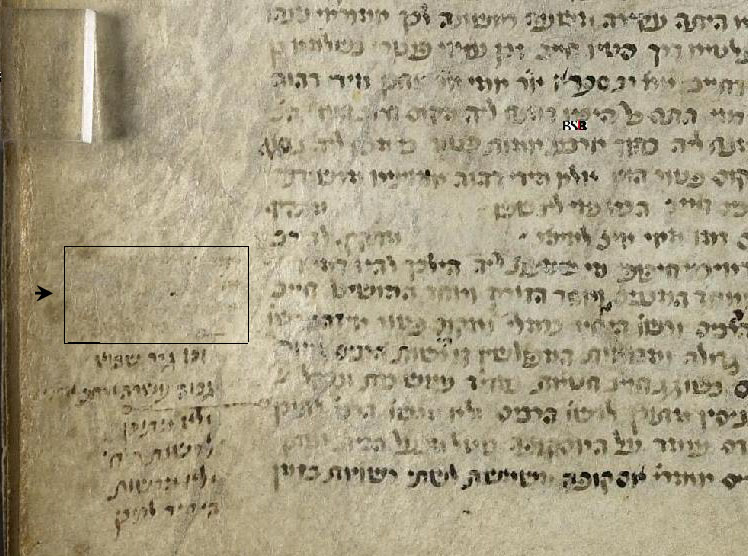
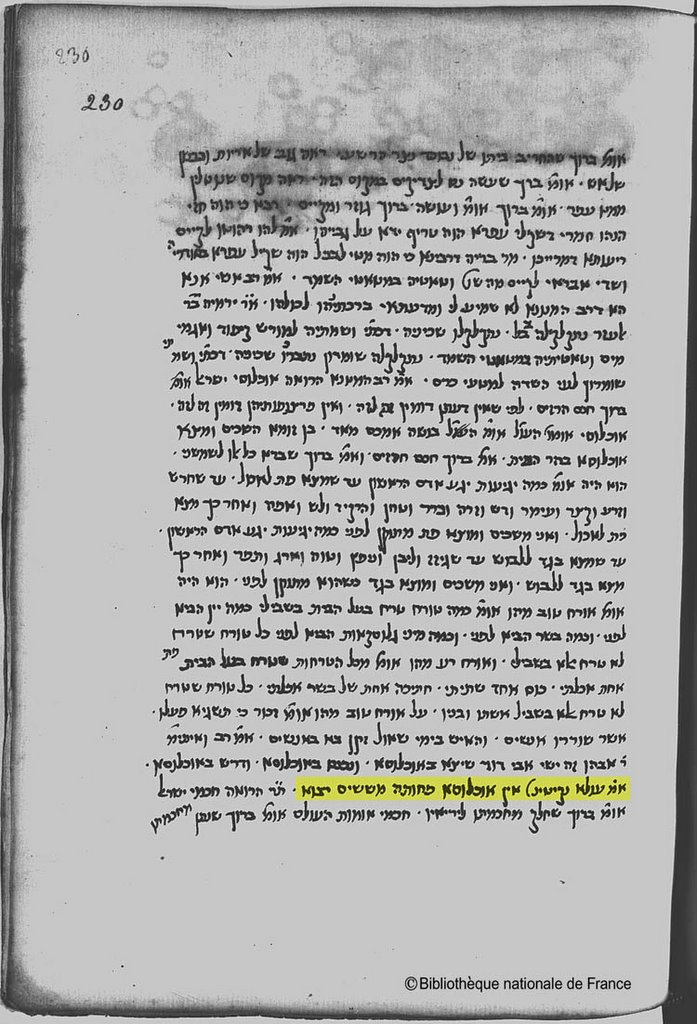
At first I thought that the answer could be that the Meiri is really a compendium and is just quoting the Ramban; this however didn’t fully satisfy me. I then perused all the manuscripts that relate to this issue and discovered something fascinating. Our passage from Ulla in Meseches Berachos (58a) which states "אמר עולה נקיטינן אין אוכלוסא בבבל. תנא אין אוכלוסא פחותה מששים רבוא" is different from the Paris codex manuscript of Meseches Berachos (Bibliotheque Nationale, Hebrew. MS. 671) where it just says "אמר עולה נקיטינן אין אוכלוסא פחותה מששים רבוא" and omits the mention of Bavel. This version of Ullas statement from the Paris codex seems to be the version that the Meiri had in Meseches Berachos (there are some other Rishonim that had this version as well). I therefore, posit that even though the Meiri had the passage from the Vatican codex of Meseches Shabbos (6a) where Ulla states that there is no reshus harabbim in Bavel he didn’t have the passage from the Paris codex of Meseches Berachos (58a) where Ulla states that there is no אוכלוסא (multitudes) in Bavel. Accordingly, he didn’t know of the connection between the two Gemaras which can be understood as being the source in Shas of the criterion of shishim ribo. Consequentially, the Meiri cites the Ramban’s objection to shishim ribo since there is no mention of it in his manuscript of Shas.
l

This facsimile above is of Meseches Berachos (58a) from the Paris codex (Bibliotheque Nationale, Hebrew MS. 671) and shows where Ulla’s words (the omission of Bavel) differ from the text in our Gemara.

Tuesday, January 10, 2006

The Overwhelming Majority of Rishonim Maintain that Shishim Ribo is a Criterion of a Reshus Harabbim


There was a famous debate between the Mishkenos Yaakov (O.C. 120) and the Bais Ephraim (O.C. 26) regarding the tally of Rishonim who pasken whether or not shishim ribo is a fundament of a reshus harabbim. The Mishkenos Yaakov sent a lengthy teshuvah to the Bais Ephraim arguing that the Taz (345:6) and Magen Avraham (345:7) are incorrect in their assumption that most Rishonim maintain that shishim ribo is a criterion of reshus harabbim since most Rishonim uphold otherwise. The Mishkenos Yaakov argued that there were only eight Rishonim who maintained that shishim ribo is a criterion of a reshus harabbim and that there were approximately 14 who upheld otherwise. The Bais Ephraim replied that one cannot argue against the accepted minhag established by the Chachmei Tzarfas and Ashkenaz and that he disagrees with the Mishkenos Yaakov’s tally of Rishonim. The Bais Ephraim goes on to argue his case and proves that the Taz and Magen Avraham are correct in their belief that most Rishonim maintain that shishim ribo is a criterion of a reshus harabbim.

The Aruch HaShulchan (345:17) and the Misnhnah Berurah (Bi’ur Halachah 345) cite the Mishkenos Yaakov’s count without mentioning that the Bais Ephraim disagreed with some on the list (however the Misnhnah Berurah obviously didn’t agree with three of the Rishonim on the Mishkenos Yaakov’s list – the Rif, Riaz and Ra’avin – since he omitted them from his list). The Aruch HaShulchan adds that some of the Rishonim whom the Mishkenos Yaakov cites were not yet published in the times of the Taz and Magen Avraham and therefore they didn’t have the actual count of Rishonim who pasken against the criterion of shishim ribo.
l
We therefore set out to count the actual number of Rishonim including those published recently who clearly pasken shishim ribo is a criterion of a reshus harabbim. The following list confirms that there are four Gaonim and 30 Rishonim (regarding the importance of the Gaonim see Kuntres Kaneh VeKinamon: Carrying and the Baal Nefesh, note 2). Therefore, since the overwhelming majority of Rishonim maintain that shishim ribo is a criterion of reshus harabbim (there are only 11 Rishonim who clearly maintain otherwise) there is no doubt that that the Mishkenos Yaakov and the Misnhnah Berurah would agree that shishim ribo is an accepted fundament.

1. Bahag, (Berlin edition) p. 131.[1] 2. Rav Amram Gaon, Halachos Pesukos Min HaGaonim, siman 70.[2] 3. Sar Shalom Gaon, Chemdah Genuzah, siman 70 and Sharei Teshuvah, siman 209.[3] 4. The Gaon mentioned in the Sefer Ha’itim, ois 206.[4]

5. Rashi, Eruvin 6a, 6b, 26a, 59a, 47a. 6. Tosfos, Eruvin 6a, 26a, 59a, and Shabbos 6b, 64b. 7. HaEshkol, Hilchos Tzitzis ois 31 and Hilchos Eruvin ois 64. 8. Sefer HaTrumah, ois 214, 239.[5] 9. Semag, Hilchos Shabbos p. 17. 10. Sefer Ha’itim, ois 92, 206, 209. 11. HaManhig, Hilchos Shabbos HaTzarichos ois 138. 12. Ra’avan, Shabbos 349.[6] 13. Piskei HaRid, Eruvin 6a, 59a, Pesachim 69a. 14. Rokeach, Hilchos Shabbos 175. 15. Ravyah, Hilchos Eruvin 379, 391.[7] 16. Riaz, Eruvin Perek 1:5, 5:5.[8] 17. HaAgudah, Perek 5:56. 18. Rivevan, Eruvin 6b, 59a. 19. HaAgur, siman 537. 20. Piskei Rabeinu Mendel Kloizner (Ramak), Shabbos 6a. 21. Rabeinu Yerucham, Toldot Adom V’Chavah 12:4, 12:17. 22. Or Zarua, Hilchos Shabbos siman 16, Eruvin 129. 23. Piskei Mahrach Or Zarua, Eruvin Perek 2 ois 57. 24. Maharam MeRotenberg, siman 31, Eruvin ois 9, 10. 25. Smak, Mitzvos Hatluyos B’Shabbos p. 296, 299. 26. Tsedah LaDerech, Perek 42, 46. 27. Machzor Vitri, Perek B'mah Isha, ois 31, 32. 28. Haitur, Hilchos Tzitzis, Shaar 3 Shaar Adom Chelek 1. 29. Rosh, Beitzah 24a, Eruvin 6a (see also Kitzur Piskei HaRosh, Perek 1:8). 30. Hagahos Ashri, Eruvin 6b, 20b. 31. Sefer HaNeyar, Hilchos Eruvin p. 51. 32. Hagahos Maimonios, Eruvin Perek 5:2, 5:4. 33. Mordechai, Shabbos 64b, 100a.[9] 34. Orchos Chaim, Hilchos Shabbos ois 284. 35. Tur, O.C. 345, 364, 392.

(We only included in this tally those Rishonim who clearly maintain that shishim ribo is a criterion of a reshus harabbim. However there are many other Rishonim who maintain that there is no reshus harabbim today and most of them must be referring to the criterion of shishim ribo as well.)

_____________________________

[1] דעת הגאון בעל "הלכות גדולות" (בה"ג) כבר מובא בתוספות (עירובין ו.) וז"ל "וכן יש ב'הלכות גדולות' דבעינן דריסת ס' רבוא". וברמב"ן (עירובין נט.) וז"ל "בכמה מקומות פירש [רש"י] שאין רה"ר גמורה אלא בעיר שיש שם ס' רבוא, ולא ידענא מנין לו לרש"י כן... אבל ב'הלכות גדולות' נמצא כן". ובחידושי הר"ן (שבת ו.) וז"ל דפירש רש"י ז"ל ובה"ג דלא הוי רה"ר אלא שיש ששים רבוא". ובמהר"ם מרוטנבורג (פסקים עירובין אות ט) "ובה"ג פירש נמי דבעינן ס' רבוא", ובתוס' הרא"ש (עירובין ו:) וז"ל "וכן מפורש בה"ג דבעינן דריסה של ס' רבוא".
אך המשכנות יעקב (סי' קכא) סבר דמכיון דלא מצא זאת בדברי הבה"ג עצמו ע"כ דעתו לא נחשבת, וז"ל בתשובתו השנית להגאון בית אפרים "אינני רואה בזה שום טעות כלל ח"ו ועיינתי בחושבנאי, לכן ראיתי לשוב כו' להתחיל על סדר בה"ג בזה אשר לא נמצא בהן מה שכ' התוס' בשמן דבעי ס' רבוא", ושוב חזר ע"ז בתשובתו שם וז"ל "והרי הר"ן והריטב"א והריב"ש וכל הפוסקים הביאו בשם רש"י ולא הזכירו שכן דעת 'הלכות גדולות' שדבריו דברי קבלה ואין נוחין לדחות בקל, אלא ודאי משמע שלא מצא הדברי בה"ג", עכ"ל המשכנ"י.
כידוע נמשך אחריו המשנה ברורה (סי' שמ"ה בביאו"ה ד"ה שאין ששים רבוא) וז"ל "ועתה נבוא להתבונן אודות מה שכתבו המג"א והט"ז דרוב פוסקים ס"ל כהי"א, הנה באמת כפי מה שהעתיק הב"י בקצור נמרץ את עקרי השיטות, דימו הם שרק אלו הם החולקים בזה, אבל כאשר חפשנו דבר זה בפוסקים מצאנו עוד הרבה מגדולי הראשונים המחמירים בענין זה. אכן מתחלה אחשב דעת המקילין בזה: ראשון לכולם הביא זה בשם בה"ג [ואינו בבה"ג שלפנינו]", עכ"ל.
אכן הקרה ה' לפנינו שבדורות האחרונים נמצא כת"י (אספמיא) של הבה"ג הנדפס בשנת תרנ"ב בבערלין ע"י חברת "מקיצי נרדמים", בעמוד 131: "רשות הרבים דוכתא דדשין בה שית מאה אלפי גוברין בכל יומא כדגלי מדבר". והם הם הדברים "דברי קבלה" של רבינו הבה"ג המובא בראשונים הנ"ל, וכבר כתב התוס' (חולין מד ע"א ד"ה כדי תפיסת היד) שדברי הבה"ג הם דברי קבלה ויש לסמוך עליהם, וכן כתב הרא"ש בשם הראב"ד (ברכות פ"ד אות יד), ובש"ך (יו"ד סי' כה ס"ק ב) וז"ל וכמה מצינו שהתוס' וכל הפוסקים חששו לדברי בה"ג אפילו היכא דלא מסתברא טעמיה, אפילו להקל, מפני שכל דבריו דברי קבלה".
[2] וז"ל רבינו עמרם גאון (הלכות פסוקות סימן ע) "מי שנפסקה לו ציצית בדרך בשבת, אם רשות הרבים היא, מקום שיש שם ס' רבוא בני אדם, אסור לטלטלה עד שתצא שבת".
[3] וז"ל רבינו שר שלום גאון (חמדה גנוזה סימן ע ושערי תשובה סימן רט) "מדינות ועיירות שאין בהם ששים רבוא, או יש בהם ששים רבוא ויש בהם חומה ודלתותיהן ננעלות בלילה, אין נעשות רשות הרבים ואין חייבין כרת וסקילה, מאי טעמא, דבעינן כדגלי מדבר". (נדפס גם בתשובות רב שר שלום גאון סימן לז ומובא גם בספר העתים אות צב בשם גאון).
[4] וז"ל ספר העתים (אות רו) "ובתשובות לגאון ד' רשויות לשבת מאי פירושה, כך אמרו חכמים ... ואיזו הוא רה"ר גמורה הי' לו מקום שיש בו ס' רבוא בני אדם ... סרטיא שווקים גדולים שממלאין ופתוחין למקום שיש בו ס' רובא ... ושנו חכמים המוציא מחנות לפלטיא ומבואות המפולשין לרה"ר והם מקום שיש בו ס' רובא."
[5] ודבריו הובאו בחידושי הר"ן עמ"ס שבת דף סד ע"ב, ובתוספות שבת שם, ובסמ"ג הל' שבת דף יח, ובאור זרוע הל' שבת סי' טז, ובהגמי"י שבת פרק יט אות ח ואות י, וברמב"ן עמ"ס שבת דף נז, ובמרדכי עמ"ס שבת פרק כל כתבי שצד, ובטור או"ח סי' ש"ג.
[6] ובערוך השולחן (סי' שמ"ה סעיף יז, בשם המשכנ"י) מונה את הראב"ן בין הראשונים האוסרים, דלא ס"ל התנאי דס' רבוא, אבל באמת הראב"ן הוא מהראשונים המקילין כמש"כ מפורש וז"ל "דהראשונים לא מיחו בנשים שלנו משום דסברי דעיירות שלנו כיון דאין רה"ר שבהן דומה לדגלי מדבר שאינו רחב ט"ז אמה... וגם אין בהם דריסת ששים רבוא כדגלי מדבר". וכנראה הרגיש בזה המ"ב (סי' שמ"ה בביאו"ה ד"ה שאין ששים רבוא) שלא הזכיר את הראב"ן במנין הראשונים האוסרים אשר נמנו במנין המשכנ"י.
[7] והובא בהגהות מרדכי שבת פרק יח.
[8] ובערוך השולחן (סי' שמ"ה סעיף יז, בשם המשכנ"י) מונה את הריא"ז בין הראשונים האוסרים, דלא ס"ל התנאי דס' רבוא, אבל באמת הריא"ז הוא מהראשונים המקילין כמש"כ מפורש וז"ל בפרק א אות ה "מבואות של כרכין המפולשין חוץ לעיר מצד זה ומצד זה, והן רחבין ט"ז אמה, והם מעבר לששים רבוא כדרך כרכין שכל באי העולם עוברים שם, הרי המבואות הללו רה"ר גמורה". וכנראה הרגיש בזה המ"ב (סי' שמ"ה בביאו"ה ד"ה שאין ששים רבוא) שלא הזכיר את הריא"ז במנין הראשונים האוסרים אשר נמנו במנין המשכנ"י.
[9] ובמשנה ברורה (סי' שמה בביאו"ה ד"ה שאין ששים רבוא) מונה את המרדכי בין הראשונים האוסרים, דלא ס"ל התנאי דס' רבוא, אבל באמת המרדכי הוא מהראשונים המקילין כמש"כ מפורש בפרק הזורק וז"ל "דאין לנו רה"ר וכל רחובות שלנו כרמלית הן, דלא מיקרי רה"ר אלא א"כ רחב ט"ז אמה ומפולש משער לשער וס' רבוא בוקעין בו".

Thursday, January 05, 2006

The 1981 Boro Park Kol Korei Exposed

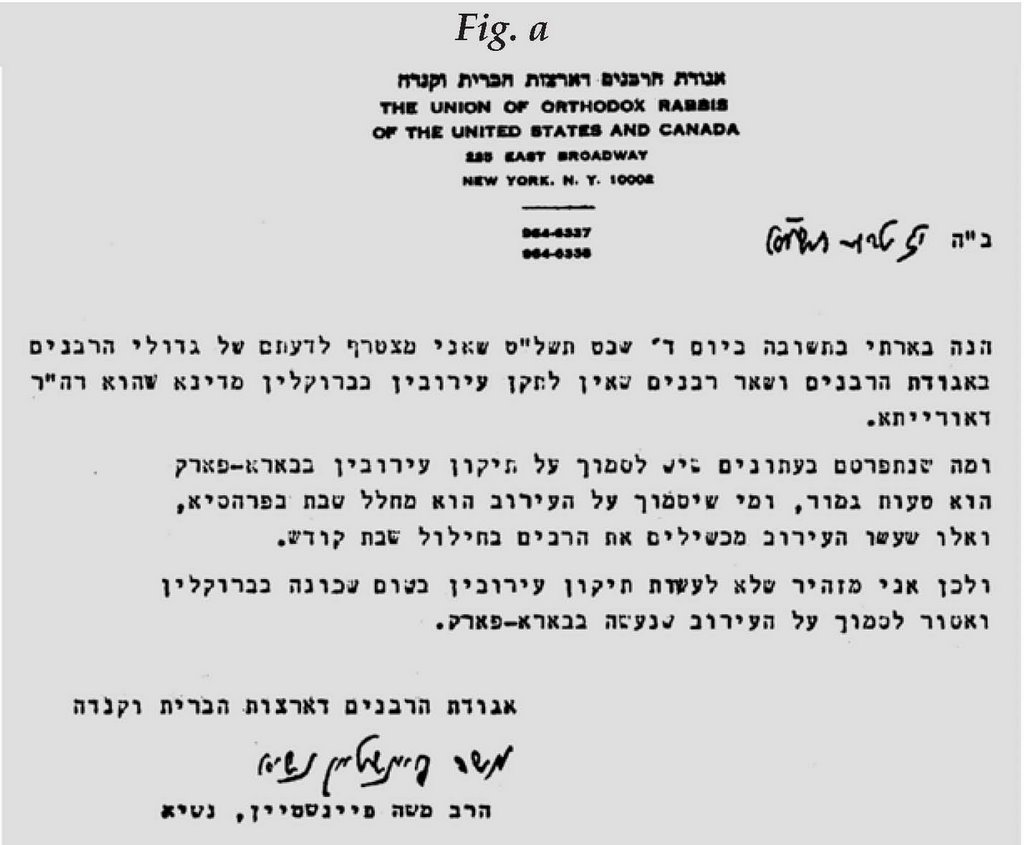
This 1981 letter [Fig. a] − which was never printed in Igros Moshe and was only circulated as a flyer − is questionable. This letter purports that, according to Hagaon Harav Moshe Feinstein zt”l’s Shevat 1979 teshuvah (Igros Moshe, O.C. 4:88), Rav Moshe joined the Agudas HaRabbonim in prohibiting eruvin in Brooklyn. In fact, Rav Moshe never mentioned a word in that teshuvah about joining the Agudas HaRabbonim in prohibiting eruvin in Brooklyn; the teshuvah was written only to clarify his prior teshuvah (ibid., 4:87). Moreover, there never was any issur from the Agudas HaRabbonim against erecting eruvin in Brooklyn, only in Manhattan (see The 1979 Flatbush Kol Korei Exposed).
l


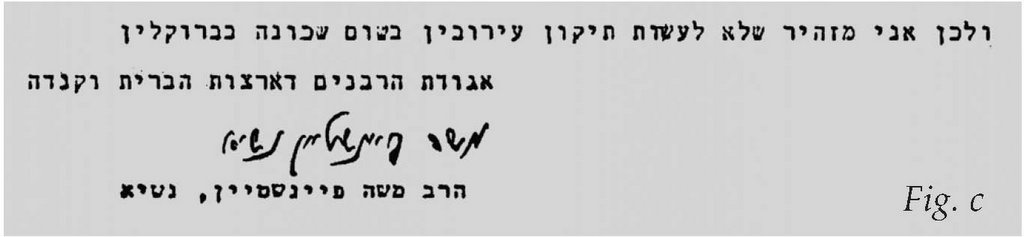
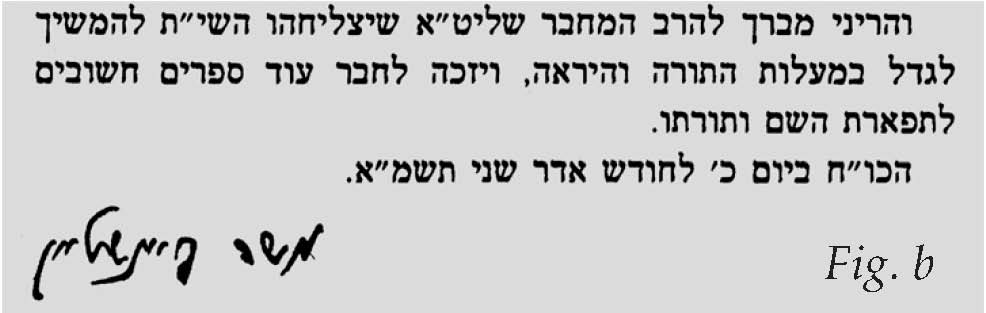
Furthermore, it is not plausible that Rav Moshe would have stated in this 1981 letter that, “those who rely on the eruv are considered a mechalel Shabbos.” We see he was uncomfortable with a comparable line that was utilized in the 1962 takanah against erecting an eruv in Manhattan since he omitted it from his teshuvah (Igros Moshe, Addendum to O.C. 4:89). Additionally, the subsequent line, “and those who erected the eruv are causing the rabbim to falter,” is questionable as well because three years earlier in his teshuvah (ibid., 4:87) to the rabbanim of Flatbush not only did Rav Moshe not censure them, he declined to issue a p’sak and acknowledged that the Aruch HaShulchan and other Achronim would disagree with him. In light of the aforementioned, Rav Menashe Klein shlita wrote (Oim Ani Chomah, siman 53) that there were Roshei Yeshivos who declared publicly that Rav Moshe never signed this letter. Moreover, it is interesting that only the date and the signature are handwritten on this flyer. [Although many people have asked to see the handwritten letter in its entirety, it has never been forthcoming.] Additionally, the signature on this letter is indistinguishable from the one on the haskamah to a booklet against erecting eruvin, and it’s impossible for two signatures to be exactly the same [Figs. b and c]. Furthermore, as this letter was typed on a manual typewriter almost twenty-five years ago, before one had the ability to type a letter with different font sizes, the two different sizes of type in this letter − Rav Moshe’s name as it was typed under his signature is smaller in size than the rest of this letter − strongly suggests that, in all likelihood, Rav Moshe’s signature was transferred from elsewhere. In light of the aforementioned inconsistencies in this letter, it follows that one can only be confident in what Rav Moshe actually stated in his teshuvos and not in what is merely written on a flyer.
l


It is important to note that all the objections to eruvin in Brooklyn are based on this 1981 letter and the 1979 kol korei (see The 1979 Flatbush Kol Korei Exposed), and as we have shown above, both are spurious documents and cannot be relied on. Finally, even if Hagaon Harav Moshe Feinstein zt”l had signed this letter and the signature on the 1979 kol korei was authentic, since Rav Moshe’s opposition to these eruvin was based on a totally different set of circumstances which does not pertain to us today, there is no question that he would have allowed our eruvin.

Wednesday, January 04, 2006

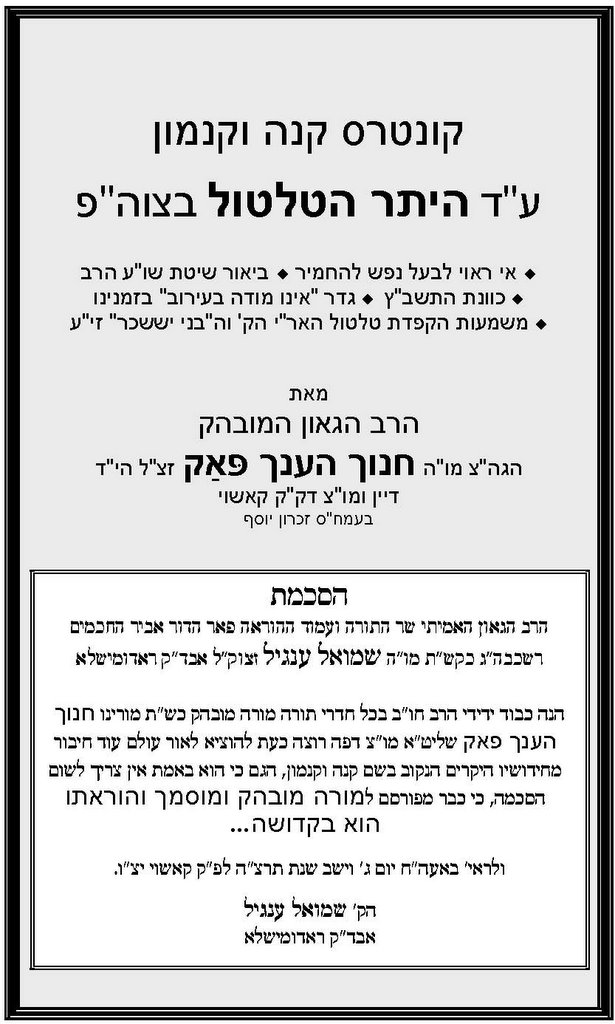
Kuntres Kaneh VeKinamon: Carrying and the Baal Nefesh

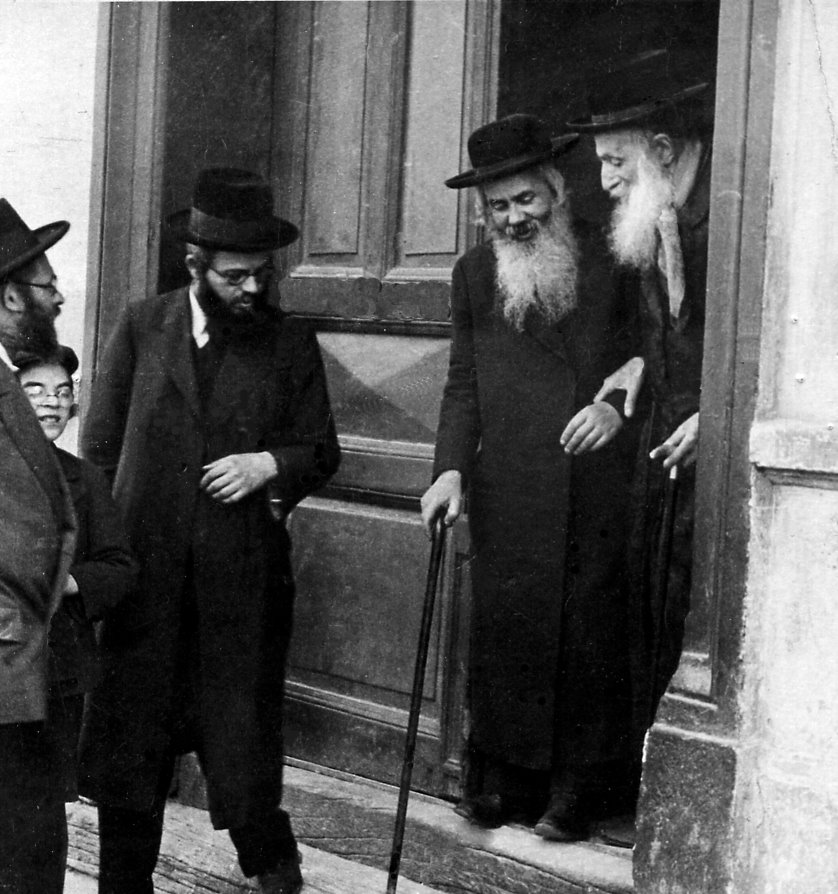
תמונה נדירה של הגאון מהר"ש ענגיל זצ"ל אבד"ק ראדומישלא (מימין לשער ביתו בעיר קאשוי) מלוה את הגאון מוהרח"ה פאק הי"ד דומ"ץ קאשוי בעל זכרון יוסף

_________________________________________________


"...הנה בחידושי זכרון יוסף (אות ער"ה) הבאתי מס' בית מאיר, דבעל נפש יחמיר על עצמו שלא לטלטל בעיר המתוקן בצוה"פ, משום דברשות הרבים לא מהני צוה"פ, א"כ עיקר ההיתר לסמוך דבזה"ז ליכא רה"ר משום דאין ס"ר בוקעים בו, ע"כ בעל נפש צריך לחוש להפוסקים דהוי רה"ר בזה"ז, וא"כ לא מהני התיקון דצוה"פ. ואני כתבתי שם, דלפי המבואר בשו"ע הרב בעל התניא ז"ל דמה"ת מהני צוה"פ אף לרה"ר, א"צ להחמיר בזה עי"ש. ועי' בס' משנה ברורה סי' שס"ד דעושה מחלוקת הפוסקים אם מהני מה"ת צוה"פ לרה"ר עי"ש. ונראה דאע"פ כן אין צריך להחמיר, כיון דהוי ספק ספיקא, א' שמא אינו רה"ר, ב' את"ל דהוא רה"ר, שמא צוה"פ מועיל לרה"ר מה"ת, ותו מותר מספיקא דרבנן שמא אינו ר"ה, כמבואר ספק ספיקא זו בש"ך בכללי ס"ס אות ט"ז. ועי' בס' תוספות שבת סי' ש"ג סכ"ג ובחי' ליו"ד אות רפ"ב.

אולם האמת מה שכתבתי בחידושי שם אות עד"ר, דהעיקר בזה כרבינו התניא ז"ל, דלכ"ע מהני צוה"פ לרה"ר מה"ת... אך שם קצרתי בזה, ועל זה הקשה לי הה"ג מוה"ר יקתיאל יהודא הכהן גראס מק"ק סעליש יע"א, הרי המשנה ברורה לא כתב זאת מדעת עצמו רק מהרי"ף והרא"ש. ע"כ אבארו פה על נכון.

דהנה מדברי רבינו התניא ז"ל שם מבואר בפשיטות, דצוה"פ מהני לרשות הרבים מה"ת לכ"ע, כמו שהביא שם מקור לזה מסי' שס"ב, הרי מבואר דזה פשוט לדעתו הקדושה מהא דסי' שס"ב. והמשנה ברורה סובר דדוקא לדיעה ב' דסי' שס"ד דסגי בדלתות ראויות לנעול מועיל צוה"פ מה"ת, אבל לדיעה א' דצריך דלתות נעולות בלילה, לא מהני צוה"פ אף מה"ת עי"ש. ולכאורה לא אדע איך תלה זה בזה. אך נראה מדבריו שם כיון דפוסקים אלו הביאו לשון רבי יוחנן שאמר ירושלים אלמלא דלתותי' ננעלות בלילה חייבין עליה משום רה"ר. אולם עי' בתוס' דף כ"ב ד"ה והא, לפי תירוץ א' שם הי' לירושלים צוה"פ, אעפ"כ אלמלא דלתותי' ננעלות בלילה הי' חייב משום רה"ר משום דרבים העוברים מבטלים מחיצה דצוה"פ, אבל בסוף כתבו התוס' שם דלפי פי' אחר שפירשו בדף ו' ניחא. וכוונתם בזה, דלפי מה שהעלו שם דמבוי רחב י"ג אמה ושליש המפולש לאורך רה"ר דינו ממש כהרה"ר הרחב ט"ז אמות עי"ש, א"כ פסי ביראות דמפולש י"ג אמה ושליש לאורך ולרוחב הרי ע"כ מפולש לאורך רה"ר ודינו ממש כרה"ר רוחב ט"ז אמות, וא"כ שפיר מקשה עליו מירושלים. ולפ"ז באמת לירושלים לא הי' צוה"פ, אלא היתר דלתות בלא צוה"פ, ואם לא הי' ננעלות בלילה הי' הילוך רבים מבטל היתר זה, ולפ"ז הילוך רבים לא מבטל אלא היתר דלתות בלא צוה"פ, או פסי ביראות, אבל צוה"פ לא נתבטל ע"י הילוך רבים. וכן כתבתי בקצרה בחי' אות רע"ד דזה דעת רבינו התניא ז"ל.

ומעתה מכל הפוסקים שהעתיקו כרבי יוחנן ירושלים אילמלא דלתותי' ננעלות בלילה חייבין עלי' משום רה"ר, אין שום ראי' נגד דעת רבינו התניא ז"ל, דהרי לירושלים לא הי' צוה"פ כנ"ל, ואהא דמבוי ניתר בלחי וקורה או בצוה"פ כתבו הרי"ף והרא"ש אבל רה"ר לא מערבין אלא בדלתות [והיינו דמדרבנן לא מהני לה צוה"פ אלא דלתות], ואח"כ כתבו והוא דננעלות בלילה דאר"י ירושלים אילמלא דלתותי' ננעלות בלילה חייבים עלי' משום רה"ר, דמשם מוכרח דראויות לנעול לא מהני אלא ננעלות דוקא, ושם חייב משום דלא הי' צוה"פ, אבל אם יש צוה"פ אסור מדרבנן אם אין ננעלות, דעכ"פ מוכח דראויות לנעול לא מהני אלא ננעלות דוקא. ומעתה אין שום פוסק קדמון נגד דעת רבינו התניא ז"ל בזה [ובאמת לחשוב דהרי"ף והרא"ש ועוד פוסקים ראשונים במקום מקור הדין הם נגד דעת רבינו התניא ז"ל הס מלהזכיר ואין להעלות כן על דעת אנושי...].

והנה הרב הנ"ל הביא מדברי השלטי גבורים בשם ריא"ז פ"ק דעירובין. אולם המעיין שם יראה דמתחלה כתב מבואות של כרכים כו', הרי המבואות הללו הם רה"ר גמורה, ואח"כ כתב ואע"פ שעשו להם צוה"פ והעמידו בהם דלתות הרי הן רה"ר עכ"ל. הרי בזה לא כתב רה"ר גמורה כמו מתחילה, ע"כ שפיר י"ל דבזה לא הוי רה"ר מדאורייתא אלא מדרבנן.

עוד כתב לי הרב הנ"ל דבהגהות אשר"י כתב דאף לרש"י דלא הוי רה"ר, מ"מ לא ניתר אלא בדלתות. הנה אילו הי' כתוב כן בהגהות אשר"י, הי' דבריו תמוהים מאוד, דהרי מבואר להדיא ברש"י בכל הסוגיא דדף ו' דהא דרה"ר לא ניתר אלא בדלתות אינו אלא אם ס' ריבוא בוקעין בו. אך האמת דלא כתוב כן כלל בהג"א בהדיא ע"ש. ומעתה אחר שאין לנו שום פוסק קדמון מפורש נגד דעת רבינו התניא ז"ל בזה, בודאי דכן הלכה בפשיטות דרק מדרבנן לא מהני צוה"פ לרה"ר, וא"כ שפיר כתיבנא דלענין דרבנן אף בעל נפש יכול לסמוך על המקילין דאין לנו רה"ר.

ומעתה י"ל דכל האחרונים שחרדו בזה חרדה גדולה מכח המעבר לרבים, הוא משום שלא נחתו לסברת רבינו התניא ז"ל דצוה"פ לא נתבטל מה"ת מכח מעבר לרבים, ע"כ הי' להם בזה חשש איסור תורה, אבל לפי מה שגילה לנו רבינו התניא ז"ל דלכ"ע עכ"פ אין בזה חשש איסור תורה, באמת אין מקום להחמיר.

עוד כתב לי הרב הנ"ל, דבפוסקים כתבו דיחמיר לעצמו דהוי רה"ר, ועל כרחך הכוונה לענין הדבר המותר בכרמלית ואסור ברה"ר כגון בצוה"פ. והנה גם רבינו התניא ז"ל סימן שמ"ה ססי"א כתב דיר"ש יחמיר על עצמו, דאף בזמה"ז הוי רה"ר. ויראה נא בדבריו בסי' רנ"ב סי"ח שכתב, דבזה"ז אין איסור כלל לצאת עם חפץ ערב שבת סמוך לחשיכה משום דלא הוי רה"ר, ולא כתב שיר"ש יחמיר, רק אדרבה כתב אין איסור כלל. מבואר דשום אדם א"צ להחמיר. ובסי' שכ"ה ס"ד פסק בסתם, דבמקום מצוה מותר לומר לנכרי שיוציא מרה"י לרה"ר שלנו, משום דשבות דשבות מותר במקום מצוה. ובק"א לסי' רנ"ב ס"ק ב' כתב, דבהפסד מרובה מותר זאת, ושם צריך מקום מצוה או הפסד מרובה משום דשבות דשבות לא הותר אלא בזה. אבל אם יר"ש צריך להחמיר דהוי רה"ר, א"כ לא הוי שבות דשבות. ושם בק"א כתב דאף מי שירצה להחמיר ברה"ר שלנו כהפוסקים דהוא רה"ר, מ"מ כדאי הם המקילים לסמוך עליהם בהפסד מרובה שהמה הרבים ופשט המנהג כמותם עכ"ל. הנה כתב דמי שירצה להחמיר, ולא כתב כלל דיש מי שצריך להחמיר,[1] ועל כרחך דהוא כמו שכתבתי, דבדרבנן א"צ כלל להחמיר בזה.

עוד הביא לי הרב הנ"ל ראיה מכמה מקומות בשו"ע הרב בעל התניא ז"ל, דאף במילי דרבנן מחמיר. ובאמת אין ראי' מהם כלל, דשאני הכא דהמקילין רבים ופשט המנהג כמותם כנזכר לעיל מק"א [וכן מבואר בט"ז ומג"א סי' שמ"ה דהמקילים הם רוב בזה, והמשנה ברורה שם הוסיף להביא עוד פוסקים מחמירים בזה, אבל אף לפי חשבונו לא רבו המחמירים. ובאמת גם מקילים יש עוד שלא חשב, כגון תשובת גאון המובא באשכול].

ומעתה על כרחך מה שכתב רבינו התניא ז"ל סי' שמ"ה הנ"ל, דיר"ש יחמיר לעצמו, היינו רק לענין דאורייתא, כגון לטלטל לתוכה מקרפף, עי' ריש סי' שמ"ו, או לענין שביתת בהמה דמבואר במג"א סי' ש"ה דבכרמלית מותר וברה"ר הוי איסור תורה [אולם בזה עי' בחבורי זכרון יוסף אות קצ"ג], או לענין המבואר בסי' שי"א ס"ב ובסי' ש"ח סי"ח עי"ש. וכן י"ל בדעת שאר הפוסקים שכתבו להחמיר בזה לעצמו, ועכ"פ דעת התניא ז"ל ברור דהוא כן וכמו שנתבאר.

עוד האריך הרב הנ"ל בענין הלכה כדברי המיקל בעירוב, שאין זה אלא בדיעבד או בשעת הדחק. ובאמת אני לא באתי כלל מכח זה, דכ"ז אין צריך אלא ביחיד נגד רבים, אבל בזה לפי הנ"ל בק"א דהמקילין רבים והמנהג כמותם, הלא בכל התורה ואפי' באיסור תורה הלכה כרבים, והיכא דהמנהג כן הלכה אפילו כיחיד כנגד רבים אפילו באיסור תורה, כמבואר במג"א סי' תר"צ, וכ"ש כאן דהוי תרתי, "רבים" ו"מנהג" ו"לענין דרבנן". ובדברי התשו' תשורת ש"י שהובא בחי' אות ער"ה, בודאי פשוט וברור כמו שהבנתי, דהביא דברי הבית מאיר דבעל נפש יחמיר משום דשמא הלכה כפוסקים דאית לן רה"ר בזה"ז, ע"ז כתב כיון דיש פסק מגאון שלא נתפרסם דלית לן רה"ר, א"כ בודאי דכן הלכה עפ"י המבואר בחו"מ,[2] א"כ אין צריך להחמיר בשביל זה. אך כתב שאר טעמים להחמיר כמבואר בחיבורי שם, אולם אני כתבתי דבלאו הכי אין מקום להחמיר בזה מכח הפוסקים דהוי רה"ר, ומכח ג' טעמים אשר כל אחד בפני עצמו כדאי להתיר, א' דהפלוגתא בזה הוי בדרבנן, ב' דהמקילים הם הרוב, ג' דהמנהג כהמקילין וכנ"ל.

ובספר ברכי יוסף סימן שס"ג הובא תשב"ץ שכתב ומי שלבו נוקפו בתיקון עירוב, הדיוטות גמורה היא או מינות נזרקה בו עכ"ל. ולפמ"ש הדבר מובן, כיון דעפ"י חוט המשולש הנ"ל אין לחוש בזה להמחמירים כנ"ל, ע"כ מי שאף זה לא די לו ורוצה להחמיר, שפיר יש לחוש בו כנ"ל. ובס' שבילי דוד סי' שס"ג הביא דברי הברכי יוסף בשם תשב"ץ וכתב, אבל במקום שיש רה"ר מפולש[3] רחב ט"ז אמות מתוקן בצוה"פ, המחמיר קדוש יאמר לו עכ"ד. אולם מסתימת לשון תשב"ץ מבואר דמיירי בסתם תיקוני מבואות, וסתם מבואות היינו אפילו רחבים ט"ז אמות, וסתם תיקון הוא צוה"פ כנודע. ועל כרחך דהוא כמו שכתבתי.

[ועפ"י הנ"ל דדבר שאין בו חשש איסור תורה, הרוצה להחמיר נגד רוב פוסקים וגם נגד המנהג, יש בו חשש מינות, י"ל נמי בהא דמבואר בסוס"י רנ"ז דכל מי שאינו מאמין בדברי חכמים ואוסר אכילת חמין בשבת, חיישינן שמא אפיקורס הוא. ולכאורה קשה מאי קמ"ל בזה, הלא בהדיא מבואר ביו"ד סי' קי"ט ס"ז דמי שאינו מאמין בדברי חז"ל הוא מומר לכל התורה כולה. אך נראה דאף שכ' הרמ"א שם דהטמנה דידן שרי לכ"ע הוא לאו דוקא, דלהרמב"ם והמחבר אסור, דלשיטתם לא מהני טח בטיט כמבואר במג"א שם, אך כיון דעפ"י רוב הפוסקים והמנהג הוא מותר כמבואר ברמ"א סי' רנ"ד ס"א, וחשש איסור תורה לית בזה, ע"כ מי שרוצה להחמיר בזה חשיב אינו מאמין בדברי חכמים ויש בו חשש מינות].

ועיין בספר נימוקי או"ח סימן שצ"ד שהביא משער הכוונות שהקדוש האר"י ז"ל נשא בעצמו בצפת על סמך תיקון עירובין. גם הביא שם מכ"ק זקינו בני יששכר ז"ל שבכל עיר שהוחזק בטוב תיקון עירובין נשא בש"ק במכוון, שלא יהי' בכלל מי שאינו מודה בעירוב. ומעתה מי לנו בעל נפש גדול מגאונים וקדושים הנ"ל שלא חששו כלל להחמיר בזה, והיינו מטעם שביארתי.

_______________________________

[1]
דיוק זה דייק גם הגאון רבי אברהם חיים נאה ז"ל בספרו "קונטרס השולחן" וז"ל, "בדפוס קאפוסט תיבות 'וכל יר"ש יחמיר לעצמו' נדפסו בחצאי עיגול במאמר מוסגר. וכן בדפוס טשערנאוויץ נדפס ממש כמו בקאפוסט. ולפ"ז אפשר שהמאמר המוסגר הזה אינו מרבינו ז"ל אלא הוספה, ולכן אין עליו ציון במראה מקום בין כל המ"מ, אלא ציון מיוחד בכוכב שהוסיפו אח"כ המאמר והציון... ובקונטרס אחרון ב' בסי' רנ"ב כתב רבינו בזה"ל, 'ואף מי שירצה להחמיר ברה"ר שלנו כהאומרים שיש לו דין רה"ר', ולא כתב 'ואף שיש ליר"ש להחמיר' כו'. מכל זה נראה דמה שכתוב כאן 'וכל יר"ש יחמיר לעצמו' הוא מאמר מוסגר, כמו שנדפס בקאפוסט, והוא הוספת מהרי"ל [אחי רבינו]..."
[2]
סימן כ"ה ברמ"א סעיף ב' בשם מהרי"ק וז"ל, "אם נמצא לפעמים תשובת גאון ולא עלה זכרונו על ספר ונמצאו אחרים חולקים עליו, אין צריכים לפסוק כדברי האחרונים, שאפשר שלא ידעו דברי הגאון ואי הוי שמיע להו הדרי בהו". ובנידון דידן מלבד רבינו הבה"ג ומלבד אחד מן הגאונים המובא באשכול [שהוא רב האי גאון], הרי נמצאו עוד כמה גאונים דס"ל להדיא דס' רבוא הוא תנאי לרה"ר דאורייתא, ה"ה רב שר שלום גאון (חמדה גנוזה סי' ע'), רב עמרם גאון (הלכות פסוקות סי' ע'), רב נטרונאי גאון (שערי תשובה סי' ר"ט), וכן הובא בספר העתים (אות צ"ב) לרב יהודה אלברצלוני.
[3]
דהיינו שהרחוב יהיה גם "מכוון" כמבואר במג"א סימן שמ"ה סעיף ו' ובמ"ב ס"ק כ"א. אבל כידוע אין זה מצוי בכרכים הגדולים כמ"ש הגאון רבי שלמה דוד כהנא ז"ל לגבי עיר ווארשא הגדולה המתוקנת בעירוב.

Monday, January 02, 2006

Part 1: Shishim Ribo – A Mystery Solved

This post is based on a article published in HaPardes (27th year, vol. 6) by Rav Mordechai Yehudah Leib Zaksh (1906-1963), author of Dikdukei Sofrim LeTalmud Yerushalmi, among other seforim.

There is a well known difficulty cited in the Ramban (Shabbos 57a and Eruvin 59a) regarding Rashi’s shita that one of the requirements of a reshus harabbim is that there has to be shishim ribo traversing the street. The Ramban questions from where does Rashi know the criterion of shishim ribo; there is no mention of this requirement in Shas at all (see also Ritvah, 59a; Magid Mishna, Shabbos perek 14:1 and Rivash, siman 405).

The following explanation will clear up this difficulty: The Meiri (Shabbos 6a) cites a passage that is not mentioned in our Gemara, “לפי שאמרו בכאן אין רשות הרבים בבבל.” The Ravyah (siman 201, p. 276) refers to a similar passage that is not stated in our Gemara, “אמר עולה אין דרך רשות הרבים בבבל.” The Gemara in Berachos (58a) states,”.אמר עולה נקיטינן אין אוכלוסא בבבל” The Gemara explains that אוכלוסא (multitudes) is not less than shishim ribo. In Meseches Berachos, Ulla maintained that there is no shishim ribo in Bavel (Babylonia) and according to this version of Meseches Shabbos, Ulla stated there is no reshus harabbim in Bavel either. Therefore, it’s logical to conclude that since there was no shishim ribo in Bavel there was no reshus harabbim as well. Rashi, when he stated that one of the requirements of a reshus harabbim is that there has to be shishim ribo traversing the street, probably based his conclusion on a similar manuscript of the Gemara as did the Meiri and the Ravyah.

Incredibly, there is a manuscript of Meseches Shabbos (6a) in the Vatican Library (Bibliotheca Apostolica, Ebr. 127; see facsimile below) that actually has these additional lines that are not printed in our Gemara, “אמ' עולה אין רשו' הרבי' בבבל אמ' רבה בר בר חנה ירושלים אילמלא דלתותי נעולות בלילה חייבי משו' רשו' הרבי." Furthermore, Rav Mordechai Yehudah Leib Zaksh provides a fascinating bit of information that in the Munich codex (Bayerische Staatsbibliothek, Hebrew MS. No. 95; see facsimile below) on the margins of this daf (Shabbos, 6a) near the place of the insertion of this phrase in the Vatican codex there is a faint Addendum note that, although illegible, starts with an "א" (for אמ' עולה) and has precisely enough words to have been the same inclusion as the Vatican codex. (The Munich codex, which was completed in 1369, is the only complete extant manuscript of the Bavli; see Raphael Nossan Nata Rabbinovicz, Dikdukei Sofrim, p. 9. According to Breslauer Jahresbericht, 1905, p. 28, the Munich codex was based on a mid-ninth century manuscript.)
l
l

This facsimile above of Meseches Shabbos (6a) from the Vatican codex (Bibliotheca Apostolica, Ebr. 127) includes the additional phrase from Ulla. Note the placement of the passage from Rabbah bar bar Chanah also in Meseches Shabbos 6a and not just in Eruvin 6b as it is in our edition of the Gemara.

l

From this facsimile above of the Munich codex (Bayerische Staatsbibliothek, Hebrew MS. No. 95) we can discern the addition on the margins of an extra paragraph that is not included in our edition of Meseches Shabbos (6a).
l
l _________________________________________________
l
In a related vein, the Gra asked the following question on Rashi’s shita (Gaon Yaakov, Eruvin, 6b; see also Bais Meir, Eruvin 6a and Bi’ur Halachah 345:7). Ulla maintains (Eruvin, 6b) that the Babylonian Mechoza (see Kesubos 54a) would be classified as a reshus harabbim if not for the fact that there was delasos that closed because, as Rashi elucidates, there was shishim ribo therein. However, according to Ulla there was no shishim ribo in Bavel (Berachos, 58a). Rav Zaksh answers that there were two distinct entities − a city called Bavel and a country called Bavel. Ulla’s statement that there was no shishim ribo in Bavel was referring to the city of Bavel; however, according to Rashi the country called Bavel could have a city, such as Mechoza, with a population of shishim ribo (see also Bais Av, 2:5:1; for an alternative response see Minchas Pitim, siman 345:7). While Rav Zaksh doesn’t mention that Tosfos (Shabbos 36b) asks on Rashi that there is no city named Bavel only a country, the Maharitats (Even Ha’ezer 2:11), Maginei Shlomoh (Shabbos 36b), and Seridei Aish (3:38) muster considerable support otherwise.

Thursday, December 29, 2005

Part 6: A Critical Analysis of Rav Yisroel Hirsch’s Critique of Eruvin in Brooklyn

Continued from part V

Page 7 comment 25:
"No one is making a gezeira! For that, a Sanhedrin or the like is necessary. R’ Moshe had a concern, which he felt was talmudically sanctioned, that precluded the construction of an eruv in any mega-metropolis. The concern was based on the conceived perception of the unsuspecting and unlearned individual who resided outside the jurisdiction of the would-be eruv. It had nothing to do with the eruv itself! On the last point I would like to say the following: Reb Dovid Feinstein’s name is mentioned in this booklet a few times. But, all that is quoted in his name is anecdotal and must therefore be discounted. I would, however, ask this of those who see him as support for their cause: If what you are saying of Reb Dovid Feinstein is true, then surely he must be an ardent supporter of the eruv in Brooklyn? But to the best of my knowledge only the contrary is true."

Rav Moshe zt"l writes (Igros Moshe, O.C. 4:88) that we find that Chazal enacted gezeiros not to establish eruvin (he wrote this in regards to his opinion about not erecting eruvin in large communities with fewer than 3,000,000 people, since some might think that there is shishim ribo therein). It’s surprising that Rav Hirsch would fail to notice that Rav Moshe himself considered this matter a gezeira.

Nowhere is it stated in Eruvin in Brooklyn that Rav Dovid shlita supports an eruv there. However as Rav Hirsch states (see comment 4) “Different aspects of any argument may be accepted or rejected, without having to accept the entire thesis … one may find one point valid and the other not.” Therefore, we can accept parts of Rav Dovid’s argument’s such as his claim that his father’s shita is that the area requires 3,000,000 and we don’t have to agree with his conclusion. Unfortunately, since there are political (as well as halachic) considerations involved, statements made regarding a different city are more credible than statements made regarding Brooklyn. Since Rav Dovid maintained -- according to his reading of his father’s teshuvos -- that an eruv can be established in Chicago, since the population is less then 3,000,000, therefore by extension an eruv can be erected in Brooklyn as well.
l
l
Page 7 comment 26:
"Because Queens is mentioned in this booklet a number of times but is never accurately portrayed, it is worthwhile to set the record straight. Queens is both larger in size and smaller in population than Brooklyn – much smaller. Its population current to the time of the responsum (1974) was 1.9 million, making the number of people living in Brooklyn in excess of those living in Queens greater than the entire population of both Boston (589,141) and Denver (554,600). Queens was the last borough of New York City to be developed, hence the many cemeteries and park, e.g. Shea Stadium, Arthur Ash, etc. It is the most spacious of the boroughs. More importantly, Queens was incorporated into the city not as a whole unit, but as a set of disparate neighborhoods that was then absorbed. As a popular travel guide (2004 ed.) put it: “ a vestige to the borough’s past as a collection of unincorporated villages.” This also explains the open spaces between different neighborhoods, a phenomenon found nowhere else in New York City. This alone was the decisive factor upon which R’ Moshe permitted the Kew Gardens (Hills) eruv, as stated in his 1974 teshuvah to R’ Peretz Steinberg. None of this has any relevance to Brooklyn."

The only decisive fact that Rav Moshe zt”l states regarding Kew Gardens Hills is that it was a small neighborhood in Queens (Igros Moshe, O.C. 4:86 and Addendum to O.C. 4:89). Rav Moshe never claimed that Kew Gardens was a separate entity and it’s a wonder that Rav Hirsch would assert otherwise. This claim regarding the evolution of Queens into a borough of NYC is totally irrelevant and was concocted as an excuse after the fact. There is no trace of it in any teshuvah from Rav Moshe. Additionally, Queens today has over 2.2 million residents and Brooklyn in the 1990’s had approximately the same number. Why was an eruv not allowed in Brooklyn then? More so, why didn’t Rav Moshe object to an eruv in Queens because some, “unsuspecting and unlearned individual who resided outside the jurisdiction of the would-be eruv (see comment 25),” would think that there is shishim ribo therein? It’s important to note that, Rav Moshe wanted to enact this gezeira in Detroit proper (ibid., 5:29) with a population of approximately 1.2 million, which is much less than Queens! The only satisfactory answer is that Rav Moshe allowed an eruv in Kew Gardens Hills since the tzuras hapesachim demarcated a small part of Queens from the rest of the borough. Therefore, there is no reason, according to Rav Moshe, not to allow an eruv of tzuras hapesachim to separate a section of Brooklyn such as Flatbush from the rest of the borough (see Brooklyn and Queens: Same or Different? and Does the Eruv Encompass Shishim Ribo).
l
l
Page 8 comment 27:
"This is bona-fide nonsense! New York City is comprised of close to 100 neighborhoods; Brooklyn, of nearly a score. Red Hook, Sunset Park, Bergen Beach, Bay Ridge, Carol Hills, Dyker Heights to mention a few Brooklyn neighborhoods. Boro Park is one small part of one borough out of five, which comprises New York City. No marginally informed semi-educated individual would entertain the notion that, between the two neighborhoods of Boro Park and Flatbush, six million out of eight million New York City inhabitants reside. Certainaly not a man as sagacious and responsible as R’ Moshe. All that R’ Moshe meant was that Flatbush/Boro Park are neighborhoods whose halachic identity extends beyond their geographic borders, encompassing the entire Brooklyn, as concerns the numerical reckoning for 600,000."

As can be ascertained from the above, Rav Hirsch doesn’t have a better explanation for Rav Moshe zt”l’s statements that both Boro Park and Flatbush contain a population of greater than shishim ribo. Rav Moshe states clearly that both Boro Park and Flatbush encompass an area less than twelve mil by twelve mil and nevertheless they contain more than shishim ribo (see Does the Eruv Encompass Shishim Ribo). On the other hand, Rav Moshe states that Brooklyn includes an area of more than twelve mil by twelve mil (Igros Moshe, O.C. 4:87-88). Consequently, these teshuvos must indicate that each neighborhood independently has shishim ribo and not just the whole of Brooklyn. Therefore, Rav Hirsch’s claim that, “ All that R’ Moshe meant was that Flatbush/Boro Park are neighborhoods whose halachic identity extends beyond their geographic borders, encompassing the entire Brooklyn, as concerns the numerical reckoning for 600,000,” is totally erroneous since Rav Moshe stated that each neighborhood on its own contains shishim ribo.
l
l
Page 8 comment 28-30:
Has already been discussed in comment 24-26.


Page 8 comment 31:
"If it is obvious that there is no platya in Brooklyn, then R’ Moshe’s raising of the issue was pointless. He was just outright wrong! This is the fifth or sixth time that this work, although claiming to explain R’ Moshe’s shitah, instead discounts it as erroneous. However, in truth there are many platyos all over New York City. Union Square in Manhattan and Fulton Mall in Brooklyn Heights are two examples. As to the assertion that the Shulchan Aruch and the Achronim have not accepted this shitah, that unfortunately, is untrue. This shitah is none other than the Rashba’s shitah – and none of the Rishonim disagree. Had the writers of this work been familiar with the Nishmas Adam (49:2), they would not have mistakenly penned these few lines. In general, I think they have not fully understood the concept of platya."

Nowhere is it stated in Eruvin in Brooklyn that Rav Moshe zt”l is c”v wrong, only that he was misled regarding certain facts. Does Rav Hirsch offer a better explanation why Rav Moshe stated that there are over a million people who come into Brooklyn to work or that both Boro Park and Flatbush contain a population of more than shishim ribo or that until then (1981) Brooklyn was not encompassed by mechitzos? We have yet to see better answers!!

While this critique is not the place for a full analysis of the shitas HaRashba (in a future post we will elaborate IY”H), we will just cite a few sources that will prove that Rav Hirsch is incorrect. There are some Rishonim who undoubtedly do not agree with the Rashba: Ran, Shabbos 6a; Ramban in Milchamos 6a, and Sefer Habattim, Sha’arei Issur Hotza’a 1:15 (see Kaf HaChaim, 345:35). These are some of the Achronim who clearly state that we don’t pasken like the Rashba: Ma’asas Binyomin, siman 92; She’eilas Yaavetz, siman 7; Ginas Veradim, 3:22; Mayim Rabim, siman 38; Birkei Yosef, 345:1; Bais Ephraim, siman 26; Bais Shlomo, siman 51; Tzemach Tzedek, Shabbos 6a; Maharsham, 1:162; Yeshuos Malko, siman 21, and Kaf HaChaim, 345:35. More so, the Achronim maintain that there is no real platya today either because our cities don’t have a central marketplace (Aruch HaShulchan, 345:22) or because our stores are indoors (Bais Av, 6:2). Consequently, even the Fulton Mall would not be classified as a platya. Additionally, even if there is a platya in Brooklyn, it is only prohibited to carry in the platya itself and not in the rest of the borough since we are excluding any platya in the tzuras hapesachim encompassing our neighborhood (Meiri, Shabbos 6a and Sefer Habattim, Sha’arei Issur Hotza’a 1:15).

Part VII

Wednesday, December 28, 2005

Does the Eruv Encompass Shishim Ribo?

From Rav Moshe zt”l’s first teshuvah listed here [Fig. a] we see he maintained that if the tzuras hapesach encircled fewer than shishim ribo it is considered as if the tzuras hapesach separates the neighborhood from the whole city and an eruv is permissible. Additionally, both these teshuvos [Figs. a and b] demonstrate that Rav Moshe was led to believe that independently Boro Park and Flatbush have populations of shishim ribo and therefore an eruv of tzuras hapesachim was not permissible. Rav Moshe states that each one of these neighborhoods encompasses less than twelve mil by twelve mil and nevertheless they have more than shishim ribo. On the other hand Rav Moshe states that Brooklyn includes an area of more than twelve mil by twelve mil (Igros Moshe, O.C. 4:87-88). Consequently, these teshuvos must indicate that each neighborhood independently has shishim ribo and not just the whole of Brooklyn. Therefore, since the Boro Park and Flatbush eruv contain considerably less then shishim ribo inhabitants (approximately 100,000 and 200,000 respectively − NYC Department of City Planning, Community District Profiles, 2002) there is no reason according to Rav Moshe not to allow an eruv to be established (see also Brooklyn and Queens: Same or Different?).
l

Tuesday, December 27, 2005

Eruv Stories: “Sticks”… and Stones

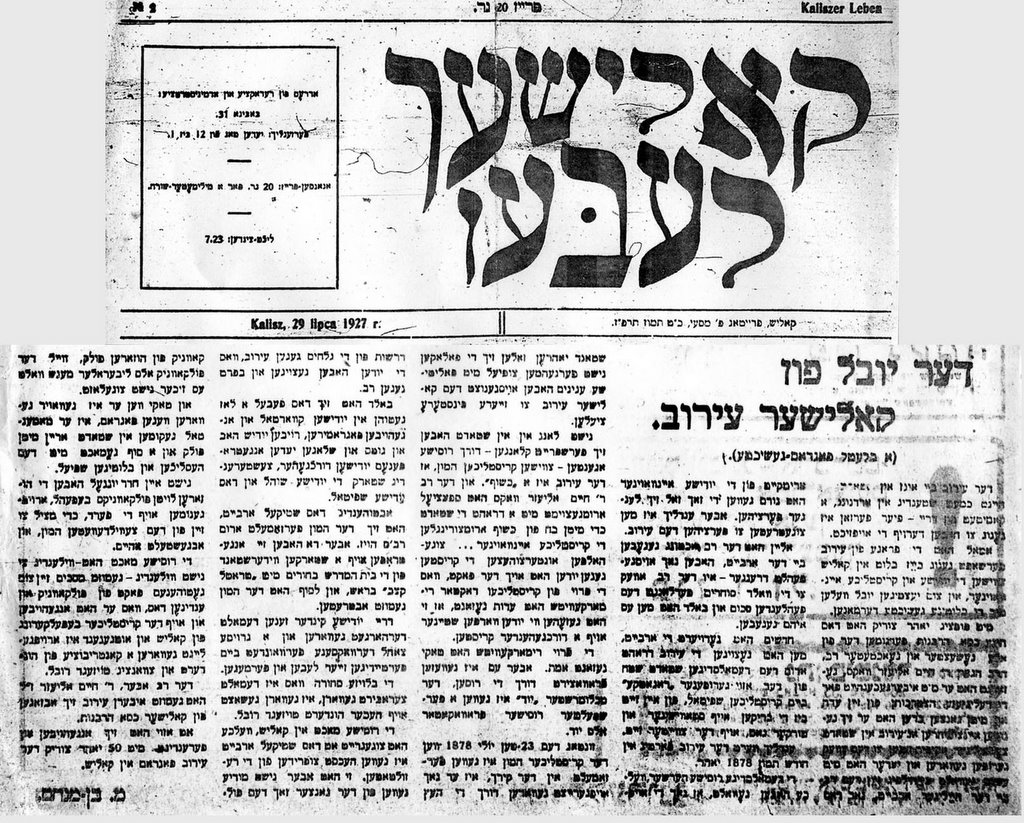
The following story is about a pogrom in the town of Kalish, Poland in 1878. The rav of the town of Kalish at that time was Harav Chaim Elazar Wachs zt”l (1822-1889), the world renowned author of the Nefesh Chayah. He had been the rav of Tarnogrod from 1842 to 1862 and then was rav in Kalish until 1881; he then served as rav in Pietrkow in 1884. The account of the pogrom below appeared in Dos Kalisher Leben 2, July 29, 1927 (see facsimile below). This translation is from The Kalish Book, 1968. For further reading on Harav Chaim Elazar Wachs see Shem V’She'eris LeNefesh Chayah, 1961.

_________________________________________________

The Jubilee of the Eruv

The Story of a Pogrom


The eruv we have in our town is now all that it should be according to Jewish law and practice; and it is almost always in proper order. This is due to the watchful activities of three or four people who constitute a Committee for the purpose. But in the past the eruv led to bitter quarrel between Jews and Christians. On the Jubilee of the eruv, let us record what happened then.

Fifty years ago the Rabbi of Kalish was the scholarly gaon Reb Chaiam Elazar Wachs, who was honored and esteemed by all. One of the matters to which he devoted himself was the establishment of the eruv in town. Dozens of meetings were held in connection with this. Everybody wanted to help the Rabbi somehow in his holy task, but the poverty of the community caused the matter to be deferred for a very long time. However, at last the actual construction of the eruv began. The Rabbi himself supervised the execution. When no more pillars were available, the Rabbi called on the wood merchants who responded favorably.

Work continued for months. The eruv was stretched round the urban area as it then existed: From the “Rogatka” as it was then called, beside the Christian Hospital as far as the Bridges across the Stawiszin and Turek Streets. It was completed about Midsummer 1878.

In those days the Russian Authorities tried to frighten the Poles away from politics. Those, after all, were the years following the Second Polish Revolt. So they decided to exploit the eruv for their own base purposes.

Within a few days the rumor spread among the Polish population that the eruv was a piece of witchcraft. The rumor was spread by Russian agents. Reb Chaim Elazar Wachs, they claimed, had surrounded the whole city with an iron wire so as to bring the entire Christian population within the field of operation of the witchcraft. Oil was poured onto this fire of incitement against the Jews by the evidence of the wife of the Christian physician Remarkevitz, who claimed that she had seen Jews throwing stones at a passing Christen woman. The doctor’s wife was telling the truth, but this was a Russian provocation. The supposed Jew was a disguised Russian provocateur.

On Sunday, July 3rd, 1878, when the Christens went to Church, the priests delivered sermons of incitement against the Jews, particularly the Rabbi, and the eruv served as the excuse. When the Christens left the Church they proceeded to the Jewish Quarter in masses and began rioting.

They began thrashing every Jew who came their way; they pillaged Jewish property and wrought destruction in the Synagogue and Jewish Hospital. When they finished all this they gathered around the home of the Rabbi. Here, however, they met with the effective resistance of the House of Study students, headed by Tratel Green the Butcher. The crowds had to withdraw.

Three Jewish children were killed in these riots, while many grown-ups were injured defending life, limb and property. It was estimated that goods to a value of more than 100,000 rubles were looted and stolen.

The Russian Authorities in Kalish, who had planned and executed this fine piece of work, were very satisfied at the results, but concealed the whole incident from the knowledge of the Colonel of Hussars, who was a liberal and would undoubtedly have protested against the whole proceeding. And sure enough, as soon as he learned about the Pogrom he came to the town at the head of his Regiment and put an end to the dreadful game. At his order the Hussars placed many cheder children on their saddles to save them from the crazed crowds and fetch them to their homes.

Against their will the Russian Authorities had to approve of his actions and follow through in his humane measures. They imposed a fine of 120,000 rubles on the Christian population of Kalish and the vicinity.

However, the late Reb Chaim Elazar had to resign his rabbinical office in Kalish an account of the incident [note - this is incorrect, see below]. That was the beginning and the end of the Eruv Pogrom in Kalish fifty years ago.

_________________________________________________

Harav Chaim Elazar Wachs zt”l did not leave Kalish because of the pogrom, but about a year later. [The reason that he left Kalish is mentioned in Shem V’She'eris LeNefesh Chayah, p. 26.] This factual error in the jubilee article in the Dos Kalisher Leben is understandable since this misinformation was already published in the enlightened Jewish newspapers at the time such as the Allgemeine Zeitung des Judenthums, Berlin (July 16, 1878 number 29 p. 458) and HaMelitz (August 21, 1878 p. 124). The Maskilem took advantage of this opportunity to ridicule the Jewish custom of eruvin (more about this in a future post). News of the pogrom spread like wildfire and European newspaper accounts reached American shores. Inevitably, erroneous information was just repeated.

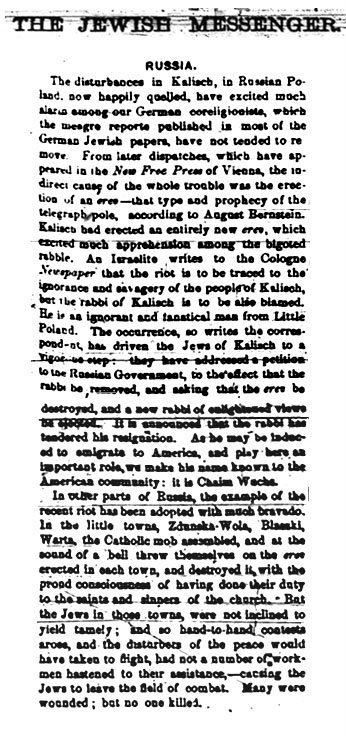
While Rabbi Samuel Myer Isaacs (1804-1878) founded the New York Jewish Messenger (1857-1902) to further the cause of traditional Judaism, his son Abram Samuel Isaacs (1853-1920) who was editor (from 1878 until 1902) at the time of our story was not so inclined (see for instance Halevanon, July 19, 1878 number 49 p. 389), and repeated this denigrating information about Harav Chaim Elazar Wachs zt”l in the Jewish Messenger August 2, 1878 (see below).
l

Monday, December 26, 2005

Like Whom Does the Rif Pasken – like Rav Yehudah or the Chachamim?

Some claim that the Bais Ephraim is incorrect when he states that the Rif could pasken like the Chachamim since some Rishonim (whose manuscripts have only been published in the last 150 years) clearly state the Rif paskens like Rav Yehudah (who paskens asu rabbim u’mevatlei mechitzta). However, the reason that some Rishonim (Rashba, Ramban, and Rivash) maintain that the Rif paskens like Rav Yehudah, is not because the Rif quotes Rav Yochanan and therefore he must pasken like Rav Yehudah. These Rishonim maintain as such because they are of the opinion that according to the Chachamim a tzuras hapesach is considered shem daled mechitzos and therefore they uphold that the sugya in Eruvin, 6a can’t be according to the Chachamim, but only like Rav Yehudah. Since when the Rif quotes the sugya he states that a tzuras hapesach isn’t sufficient for a reshus harabbim, these Rishonim state that he paskens like Rav Yehudah. However the overwhelming majority of Rishonim whom pasken like the Chachamim maintain that a tzuras hapesach is not considered shem daled mechitzos (see Tosfas, Eruvin 6a; see The Overwhelming Majority of Rishonim Maintain Lo Asu Rabbim U’Mevatlei Mechitzta). Hence, the sugya according to the Rif can be in agreement with the Chachamim – as the Bais Ephraim elucidates – even though he quotes Rav Yochanan. Both the Ravyah (p. 270, 276) and HaEshkol (siman 64-65) quote Rav Yochanan and pasken like the Chachamim, which buttresses what the Bais Ephraim states is the p’shat in the Rif. [Regarding the first opinion of the Shulchan Aruch, the Rif, see The Shulchan Aruch Explained.]

More so, the Raved, Rabeinu Yonasan, Meiri (Eruvin 20, 22a) and even Rishonim like the Rashba (who quotes the Raved), Ran and Ramban (see Gaon Yaakov, Eruvin 6), who state that the Rif paskens like Rav Yehudah, maintain that if we have mechitzos that are omed merubeh al ha’parutz, even Rav Yehudah would agree that we pasken lo asu rabbim. (From this we see that the Bais Ephraim and the Chazon Ish were guided min hashomayim. They stated that only the Ritva explicitly states Yerushalyim was omed merubeh al ha’parutz and we pasken asu rabbim like Rav Yehudah which is not contadicted by any of the Rishonim discovered recently.)

Thursday, December 22, 2005

History of City Eruvin: An Ongoing Historical Analysis Regarding City Eruvin

Preface

Prior to WWII, there were many struggles in European cities regarding eruvin. The resistance towards eruvin started in the beginning of the 1800’s, when most cities began to disassemble their ramparts. In order to erect tzuras hapesachim, permission was now needed from the civil authorities, and this was not always easy to obtain. This caused great hardships on the rabbanim of the towns, and they needed to formulate novel approaches in order to establish these eruvin.

As the goal of this series is to present the political underpinnings of the conflicts, I will only provide on overview of the halachic issues, since a full halachic treatment would necessitate numerous posts causing us to digress. The first accounts presented in this series will be about conflicts between religious Jews; however, most of the confrontations facing the religious Jews were between them and the Maskilim or the non-Jews. At first we will deal with the disagreements regarding eruvin in large cities where the machlokes was an internal power struggle between the supporters of the different rabbis of the town (see Why is Eruvin Different From Any Other Issue that it Elicits Such a Visceral Response?). We will see that even though the confrontations manifested themselves in halachah, their underpinnings were usually of a political nature (which has parallels in the present day eruvin machlokas), and I will endeavor to present the facts from rabbinic and archival sources wherever possible. We will begin with Krakow in 1887 since it is the first documented large city with such a machlokas, and then IY”H follow up with cities with populations of even more than shishim ribo.

Tuesday, December 20, 2005

The Hundredth-Year Anniversary of the First Eruv in New York 1905-2005

A city eruv in New York, despite what some would like us to believe, is not a novel concept but part of a longstanding tradition with roots in our European heritage.

The first record of a discussion regarding eruvin in New York City [Manhattan] was in 1901 when the rabbanim Hagaon Harav Tzvi Yechezkel Michelzon zt”l, one of the main rabbanim of Warsaw, and Hagaon Harav Yosef Levenstein zt”l, Av Bais Din of Serotzk, agreed that halachically it was permissible to establish an eruv there (see Chavalim BaNe’imim, 3:17 and Tirosh VaYitzhar, siman 73).

In 1905, an eruv was established by Hagaon Harav Yehoshua Seigel zt”l, the Chief Rabbi of Kehilas Yisroel and one of the most noteworthy poskim of that era living in New York (Otzar Zichronasi, pp. 118, 352). At the time, Rav Seigel published a kuntres, Eruv V’Hotzaah, in which he established the halachic underpinning for an eruv in New York, guidelines that are still pertinent today. Members of the Polish and Galician communities in New York asked their rabbanim in Europe if it was permissible to utilize this eruv. These Gedolei HaPoskim the Brezaner Rav (Maharsham, 9:18), Stanislaver Rav (Harei B’samim, 5:73), Hagaon Harav Moshe Meisels zt”l, Av Bais Din Premishler (Eruv V’Hotzaah), and Hagaon Harav Moshe Nachum Yerushlimsky zt”l, Av Bais Din Kieltz (Eruv V’Hotzaah) answered with a resounding yes. Rav Seigel’s eruv only encompassed the Lower East Side, utilizing the natural riverbanks [mechitzos hayam] of Manhattan on three sides and on the fourth side, the Third Avenue El as a tzuras hapesach.

As the Jewish community migrated out of the Lower East Side, there was a growing need to enlarge the Manhattan eruv to encompass the whole Manhattan. In 1949, the Amshinover Rebbe zt"l urged Hagaon Harav Rav Tzvi Eisenstadt zt”l to establish an eruv that included the whole Manhattan. Rav Eisenstadt spent days investigating the Manhattan waterfront and concluded that it was bounded by man-made walls [mechitzos b’y’dai adam] and an eruv could be established (Minchas Tzvi, siman 4). There were many meetings and teshuvos written concerning this eruv, the culmination being that most rabbanim allowed an eruv in Manhattan. Along with Rav Eisenstadt, and the Amshinover Rebbe, the list included the Kapishnitzer Rebbe, Boyaner Rebbe, Novominsker Rebbe, Radziner Rebbe, Hagaon Harav Michoel Dov Weissmandel, Hagaon Harav Yonasan Steif, Hagaon Harav Tzvi Pesach Frank, Hagaon Harav Menachem Kasher, and the Shatzer Rebbe, zt”l. By 1960, even Hagaon Harav Eliyahu Henkin zt“l had signed onto the committee to establish an eruv (Divrei Menachem, O.C. vol. 2, p. 10; see also Kisvei Hagriah Henkin, p. 33 where he urges the rabbanim of the Bronx and Brooklyn to erect eruvin). In Iyar of 1962, an eruv was finally established under the supervision of the Shatzer Rebbe zt”l.

Monday, December 19, 2005

An Eruv in Karlin?

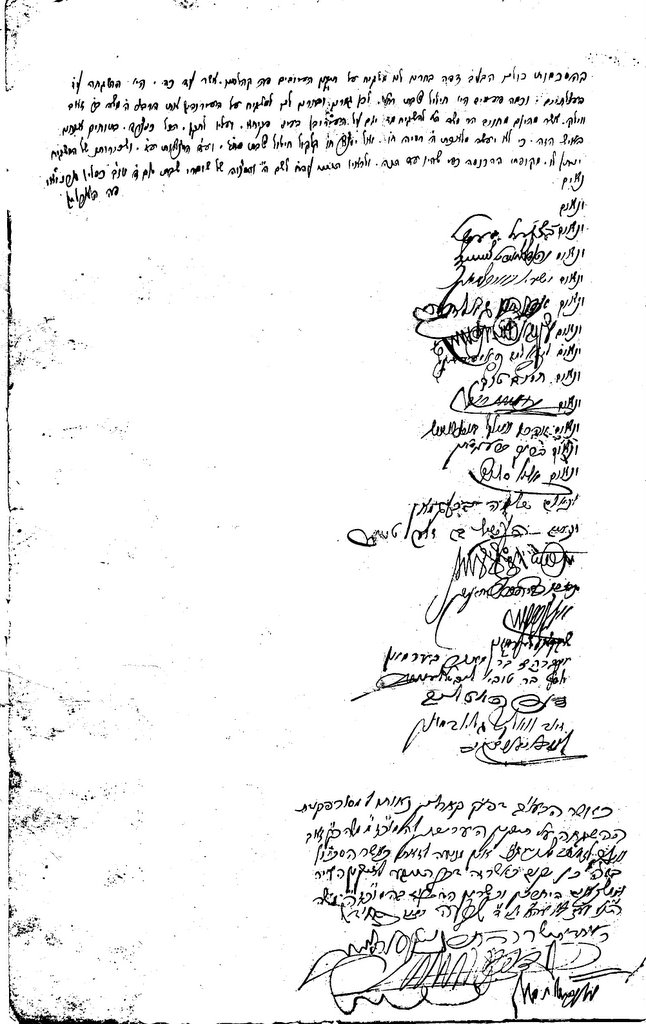
This historic document shows that there was an eruv established even in the city of Karlin where the Mishkenos Yaakov – who objected to the minhag of erecting eruvin in all cities and towns – was the rav. This document bears witness to the election of the mashgiach of the eruv, Rav Moshe Zev Wilk and it was signed by the Moreh D’Asra Hagaon Harav Dovid Friedman (zt”l, the author of She’eilas Dovid) together with 22 baalei battim on the Fourth of Kislev 1896 (see Part 2: Meoz U’Mekedem – Exploring the Historical Roots of the Machlokas Regarding Eruvin, note 30).
l

Yerushalayim of Old and Brooklyn: A Common Thread?

Rav Moshe Feinstein zt”l, using Yerushalayim in the times of the Bais HaMikdash as his precedent (Igros Moshe, O.C. 1:139:5, 4:89, 5:28:15), maintained that an eruv should not be erected in Manhattan even if there is no halachic basis against establishing an eruv there. Rav Moshe maintained that an eruv was not erected in Yerushalayim in the times of the Bais HaMikdash because of the fear that people who traveled to Yerushalayim from all over the world would, upon returning home, erect eruvin improperly. [The Noda B’Yehudah, Mahadura Tinyana Kuntres Achron (siman 21) and the Tiferes Yisroel (Eruvin, 10:57) maintain that an eruv was allowed in Yerushalayim, however it was not possible to establish an eruv at the time.] Since Manhattan like Yerushalayim has many visitors from all over the world, Rav Moshe maintained an eruv should not be established in Manhattan as well. However, Rav Moshe agreed (HaPardes, 33rd year, vol. 9; Kuntres Tikkun Eruvin Manhattan p. 161, and Divrei Menachem, O.C. vol. 2, siman 4) that if the rabbanim in Manhattan would erect an eruv, the precedent of Yerushalayim would not pose an obstacle. How much more so would Rav Moshe have allowed an eruv that had been erected in Brooklyn, as he was not sure if Brooklyn was even comparable to Yerushalayim at all (Igros Moshe, O.C. 1:139:6, 5:28:15).

Friday, December 16, 2005

Eruvin: Whose Obligation

Just as it is the responsibility of each individual rav to insure that there be a kosher mikveh in his community, it is incumbent on each rav to erect an eruv as well (Teshuvos V’Hanhagos, 1:844; see also Chasam Sofer, O.C. 99). Even more so, the Chemdas Shlomo (p. 203) states that members of the community should establish an eruv. The obligation is theirs as well as the rav’s.

Eruv = Tzuras Hapesach

There are those who claim that the term eruv refers to eruvei chatzeiros and not to a tzuras hapesach. However the Gemara (Eruvin 6a) calls a tzuras hapesach an eruv; see also the Piskei Rid (Shabbos 6a) for further proof that the term eruv applies to both the physical construct and the brachah.

Wednesday, December 14, 2005

The Requirement of Shishim Ribo: Is It Conditional on a City?

This teshuvah proves Rav Moshe Feinstein zt”l knew that there were cities with populations exceeding shishim ribo (600,000) and nevertheless, eruvin had been erected there. Therefore he posited that like the diglei hamidbar there would need to be 3,000,000 people over an area of twelve mil by twelve mil in order for that area to be classified as a reshus harabbim. Consequentially, those that argue that shishim ribo as stated in the Shulchan Aruch is conditional of a city and not a street would have to answer the fact that there were cities that had a population of shishim ribo and nevertheless established eruvin.
l


The following large cities with populations of 600,000 erected eruvin: Warsaw, which was not walled from the year 1877 and which had shishim ribo on the larger side from the year 1900 (Mishmeres Sholom, 24:10; Divrei Menachem, O.C. vol. 2, pp. 42-43; Encyklopedia Warszawy, 1994 p. 187, and Rocznik Statystyczny Warszawy 1921 i 1922, 1924 p. 14; see also Igros Moshe, O.C. 5:28:5), Lodz (Mishmeres Sholom, 24:10 and Encyclopedia Judaica, 1996 vol. 11 p. 426), Odessa (Divrei Malkiel, 3:14-18, 4:3; Tikkun Shabbos, and Tuv Yehoshua), Manchester (introduction Bais Av vol. 2 and Encyclopedia Britannica, 1911 vol. 17 p. 547), St. Louis (Tikvas Zechariah and Encyclopedia Britannica, 1911 vol. 24 p. 24), and New York in 1905 (Oznei Yehoshua, 1:18; Tirosh VaYitzhar, siman 73; Eruv V’Hotzaah, and US Census, 1900).

Watch this Space for an Upcoming Exposé

Stay tuned for an exposé on an eruv builder based out of Chicago who travels across America, actively seeking flaws in community eruvin . ...